An incredible hike with an amazing group of people. Badri managed to get us in and out of Lukla on days when we thought flights may not be possible and he tried his very best to accommodate the needs of the group. The team of porters supporting Karen Darke were out of this world and did an incredible job, with big smiles. Wonderful people. The trek itself was incredible and we had fantastic weather during the whole trip. Although the ‘B Team’ snail ed it, we had an excellent adventure thanks to Badri and his very supportive team.
Teahouse Treks
Authentic Nepal Trekking
Kanchenjunga North Base Camp Trek – 15 Days
The Kanchenjunga North Base Camp Trek is a remote 15-day trekking package in eastern Nepal. It takes you to Pangpema, the northern base camp of Mount Kanchenjunga.
Mount Kanchenjunga is the world’s third-highest mountain at 8,586m. The North Base Camp, also called Pangpema, is commonly listed at 5,143m / 16,873ft. It gives dramatic close views of Kanchenjunga Main, Jannu / Kumbhakarna, Yalung Kang, and surrounding peaks.
This trek is perfect for trekkers who want a quiet and wild Himalayan route. It is far less crowded than Everest Base Camp or Annapurna Base Camp. Also, it offers deep valleys, forests, waterfalls, alpine meadows, glaciers, and remote mountain villages.
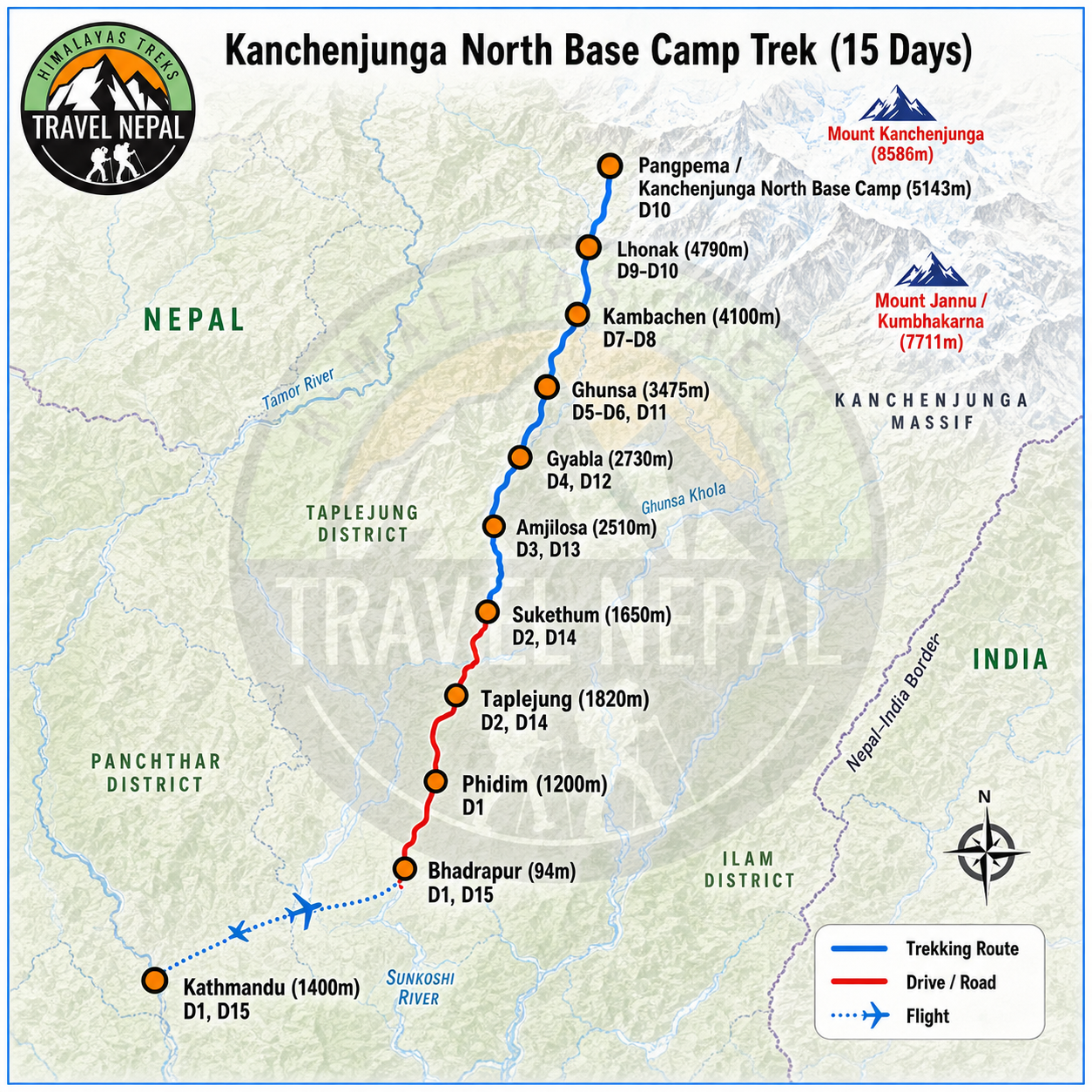
The route starts with travel from Kathmandu to eastern Nepal. Then, the trek follows Sekathum, Amjilosa, Gyabla, Ghunsa, Kambachen, Lhonak, and Pangpema. After reaching Kanchenjunga North Base Camp, the route returns through the same valley.
The Kanchenjunga Conservation Area is a protected region in Taplejung District. It was established in 1997 and covers around 2,035 square kilometers. The region is known for wilderness, culture, and rare wildlife.
The Kanchenjunga North Base Camp Trek – 15 Days is best for fit trekkers, experienced hikers, photographers, nature lovers, and travelers who want a true off-the-beaten-path adventure.
Why Choose Kanchenjunga North Base Camp Trek?
The Kanchenjunga North Base Camp Trek is one of Nepal’s best remote trekking routes. It is quiet, wild, and culturally rich.
This trek is not like the busy Everest or Annapurna routes. Here, you walk through peaceful villages, deep forests, rivers, and glacial valleys. Also, you meet local communities such as Limbu, Rai, Sherpa, and Tibetan-influenced mountain people.
This trek is ideal for travelers looking for:
• A 15-day Kanchenjunga North Base Camp Trek package
• A remote trek in eastern Nepal
• A guided trek to Pangpema / Kanchenjunga North Base Camp
• A less-crowded alternative to Everest and Annapurna
• A trek inside Kanchenjunga Conservation Area
• Close views of Kanchenjunga, Jannu, Yalung Kang, and Pyramid Peak
• A route through Ghunsa, Kambachen, Lhonak, and Pangpema
• A true wilderness trekking experience
• A challenging high-altitude trek
• A private guided Nepal trekking package
• A package for travelers from the USA, Australia, Canada, Europe, Asia, and worldwide
Kanchenjunga North Base Camp Trek Highlights
• Reach Pangpema / Kanchenjunga North Base Camp at around 5,143m
• Enjoy close views of Mount Kanchenjunga, the world’s third-highest mountain
• See Jannu / Kumbhakarna, Yalung Kang, Kirat Chuli, and Pyramid Peak
• Trek through one of Nepal’s most remote mountain regions
• Explore Ghunsa, a beautiful Tibetan-influenced village
• Walk through Amjilosa, Gyabla, Kambachen, and Lhonak
• Cross rivers, suspension bridges, forests, cliffs, and glacial moraine trails
• Experience Limbu, Rai, Sherpa, and Tibetan-influenced culture
• Trek inside Kanchenjunga Conservation Area
• Enjoy rhododendron forests, alpine meadows, and glacier scenery
• Experience quiet trails with fewer trekkers
• Spot rare wildlife if lucky, such as red panda, blue sheep, or Himalayan birds
• Enjoy a true off-the-beaten-path adventure in Nepal
Best Time for Kanchenjunga North Base Camp Trek
The best time for the Kanchenjunga North Base Camp Trek is spring and autumn.
Spring, from March to May, is one of the best seasons. The weather is warmer than winter. Also, rhododendron forests can bloom beautifully in the lower sections.
Autumn, from September to November, is another excellent season. After the monsoon, the sky is often clear. Therefore, mountain views are usually sharp.
Winter is possible only for experienced trekkers. However, it can be very cold in Ghunsa, Kambachen, Lhonak, and Pangpema. Snow may also affect the higher trail.
Monsoon is less recommended. Rain, clouds, landslides, leeches, and muddy trails can affect the lower route.
Spring and autumn are also listed as the best seasons for Kanchenjunga North Base Camp trekking by current route operators.
Kanchenjunga North Base Camp Trek Difficulty
The Kanchenjunga North Base Camp Trek is a challenging trek. It is remote and high. Also, it has long walking days.
You do not need climbing skills. However, you need good fitness, strong legs, and previous hiking experience.
The trek reaches Pangpema at around 5,143m / 16,873ft. So, altitude is a major challenge. The trail also includes rocky paths, forest climbs, narrow sections, suspension bridges, and glacial moraine.
This 15-day version is shorter than many standard Kanchenjunga itineraries. Therefore, it is best for fit trekkers. Extra acclimatization days are recommended if you have more time.
Kanchenjunga North Base Camp Trek Permits
The Kanchenjunga region is a restricted trekking area. So, trekkers need special permits and agency support.
For this trek, travelers normally need:
• Kanchenjunga Restricted Area Permit / RAP
• Kanchenjunga Conservation Area Project Permit / KCAP
• TIMS Card as per current trekking rules
• Licensed trekking guide
• Registered trekking agency support
Nepal’s Department of Immigration states that restricted areas are highly regulated. It also says trekking in restricted areas is allowed only after getting the required trekking permit.
Recent permit guides list the Kanchenjunga Restricted Area Permit at USD 20 per person per week for the first 4 weeks and USD 25 per week beyond 4 weeks. They also list the Kanchenjunga Conservation Area permit as required. Permit fees can change, so always confirm the latest cost before booking.
Your trekking agency should arrange permits, guide, transport, flights, accommodation, and full trekking support.
Trip Itinerary
Outline Itinerary
• Day 01: Arrival in Kathmandu
• Day 02: Permit Preparation and Fly to Bhadrapur, Drive to Ilam
• Day 03: Drive from Ilam to Sekathum via Taplejung
• Day 04: Trek from Sekathum to Amjilosa
• Day 05: Trek from Amjilosa to Gyabla
• Day 06: Trek from Gyabla to Ghunsa
• Day 07: Acclimatization Day in Ghunsa
• Day 08: Trek from Ghunsa to Kambachen
• Day 09: Acclimatization Day in Kambachen
• Day 10: Trek from Kambachen to Lhonak
• Day 11: Hike to Pangpema / Kanchenjunga North Base Camp and Return to Lhonak
• Day 12: Trek from Lhonak to Ghunsa
• Day 13: Trek from Ghunsa to Amjilosa
• Day 14: Trek to Sekathum and Drive to Taplejung / Ilam
• Day 15: Drive to Bhadrapur and Fly to Kathmandu / Final Departure
Details Itinerary
Day 01: Arrival in Kathmandu
After your arrival at Tribhuvan International Airport, our representative will welcome you. Then, you will transfer to your hotel in Kathmandu.
You can rest after your flight. In the evening, your guide will give a short trek briefing.
The briefing covers route, permits, gear, weather, altitude safety, remote trail conditions, and daily walking plan.
• Altitude: Kathmandu – 1,300m / 4,260ft
• Transfer Time: Approx. 30–45 minutes
- Lodging: Hotel in Kathmandu
- Inclusions: Welcome Dinner
Day 02: Permit Preparation and Fly to Bhadrapur, Drive to Ilam
Today is a travel and preparation day. Your agency will complete permit work before departure.
Then, you will fly from Kathmandu to Bhadrapur in eastern Nepal. After landing, you will drive toward Ilam.
Ilam is famous for tea gardens, green hills, and peaceful scenery. This day helps you move closer to the Kanchenjunga trailhead.
• Altitude: Bhadrapur – approx. 91m / 299ft; Ilam – approx. 1,200m / 3,937ft
• Flight/Drive Time: Flight approx. 45–50 minutes; drive approx. 4–5 hours
- Lodging: Hotel / Lodge
- Inclusions: Breakfast, Lunch, Dinner
Day 03: Drive from Ilam to Sekathum via Taplejung
After breakfast, you will drive deeper into eastern Nepal. The route passes tea gardens, hills, rivers, small towns, and mountain roads.
You will pass Taplejung or nearby settlements. Then, you continue by jeep toward Sekathum, depending on road condition.
The road can be long and rough. However, it gives a real feeling of entering remote eastern Nepal.
• Altitude: Sekathum – approx. 1,650m / 5,413ft
• Drive Time: Approx. 8–10 hours depending on road condition
- Lodging: Tea House / Lodge
- Inclusions: Breakfast, Lunch, Dinner
Day 04: Trek from Sekathum to Amjilosa
After breakfast, the trekking journey begins. The trail follows river valleys, forests, cliffs, and suspension bridges.
You will walk through narrow sections and climb gradually toward Amjilosa. The route feels wild from the first trekking day.
Amjilosa is a small settlement surrounded by green hills and forest. It is a peaceful overnight stop on the Kanchenjunga North Base Camp route.
• Altitude: Amjilosa – approx. 2,410m / 7,907ft
• Trek Time: Approx. 6–7 hours
- Lodging: Tea House / Lodge
- Inclusions: Breakfast, Lunch, Dinner
Day 05: Trek from Amjilosa to Gyabla
Today, you will continue through forests, river valleys, and remote mountain paths. The trail climbs and descends through quiet landscapes.
You may walk through bamboo, rhododendron, and mixed forest areas. Also, you may hear birds and rivers along the route.
Gyabla is a small mountain village. It gives a calm and remote feeling before reaching the higher cultural village of Ghunsa.
• Altitude: Gyabla – approx. 2,730m / 8,957ft
• Trek Time: Approx. 5–6 hours
- Lodging: Tea House / Lodge
- Inclusions: Breakfast, Lunch, Dinner
Day 06: Trek from Gyabla to Ghunsa
After breakfast, the trail continues toward Ghunsa. The route passes forests, open valleys, and small settlements.
As you go higher, the culture becomes more Tibetan-influenced. You will see prayer flags, stone houses, and mountain village life.
Ghunsa is one of the most important villages on the Kanchenjunga North Base Camp Trek. It has lodges, local homes, and a strong Himalayan atmosphere.
• Altitude: Ghunsa – approx. 3,595m / 11,795ft
• Trek Time: Approx. 5–6 hours
- Lodging: Tea House / Lodge
- Inclusions: Breakfast, Lunch, Dinner
Day 07: Acclimatization Day in Ghunsa
Today is an important acclimatization day. You will stay in Ghunsa to help your body adjust.
You can take a short hike above the village. This helps with altitude adaptation. Also, it gives beautiful views of the surrounding hills and peaks.
Later, you can explore Ghunsa village. You may visit local monasteries, meet local people, and rest before going higher.
• Altitude: Ghunsa – approx. 3,595m / 11,795ft
• Activity Time: Approx. 2–4 hours light hike
- Lodging: Tea House / Lodge
- Inclusions: Breakfast, Lunch, Dinner
Day 08: Trek from Ghunsa to Kambachen
After breakfast, you will trek toward Kambachen. The trail climbs through pine forests, landslide areas, open valleys, and mountain scenery.
You should walk carefully in rocky sections. Also, you should follow your guide’s advice because the trail can be rough.
As you approach Kambachen, views of Jannu / Kumbhakarna become more impressive. Kambachen is a remote high-altitude village and an important stop before Lhonak.
• Altitude: Kambachen – approx. 4,050m / 13,287ft
• Trek Time: Approx. 5–6 hours
- Lodging: Tea House / Lodge
- Inclusions: Breakfast, Lunch, Dinner
Day 09: Acclimatization Day in Kambachen
Today is another acclimatization day. This is important because the trek has reached above 4,000 meters.
You can take a short hike around Kambachen. The area offers views of Jannu, glaciers, ridges, and high alpine landscapes.
After the hike, you will return to the lodge. Then, you can rest, drink water, and prepare for the trail to Lhonak.
• Altitude: Kambachen – approx. 4,050m / 13,287ft
• Activity Time: Approx. 2–4 hours light hike
- Lodging: Tea House / Lodge
- Inclusions: Breakfast, Lunch, Dinner
Day 10: Trek from Kambachen to Lhonak
After breakfast, you will trek from Kambachen to Lhonak. The route becomes more alpine and remote.
You will walk through rocky valleys, glacial landscapes, and wide mountain scenery. The trail is not very technical. However, altitude makes walking slower.
Lhonak is a high settlement with basic lodges. It is the main overnight stop before the hike to Pangpema / Kanchenjunga North Base Camp.
• Altitude: Lhonak – approx. 4,780m / 15,682ft
• Trek Time: Approx. 5–6 hours
- Lodging: Basic Tea House / Lodge
- Inclusions: Breakfast, Lunch, Dinner
Day 11: Hike to Pangpema / Kanchenjunga North Base Camp and Return to Lhonak
Today is the main highlight of the trek. You will start early and hike toward Pangpema.
The trail follows glacial moraine and high alpine terrain. You will walk slowly because the altitude is high.
Pangpema is the northern base camp of Kanchenjunga. From here, you can enjoy close views of Kanchenjunga Main, Jannu, Yalung Kang, and other surrounding peaks.
After enjoying the views, you will return to Lhonak for the night. This is a long and rewarding day.
• Altitude: Pangpema / Kanchenjunga North Base Camp – approx. 5,143m / 16,873ft; Lhonak – approx. 4,780m / 15,682ft
• Trek Time: Approx. 7–8 hours round trip
- Lodging: Basic Tea House / Lodge
- Inclusions: Breakfast, Lunch, Dinner
Day 12: Trek from Lhonak to Ghunsa
After breakfast, you will begin the return journey. The trail descends from Lhonak toward Kambachen.
As you go lower, breathing becomes easier. However, you should still walk carefully on rocky sections.
After passing Kambachen, you will continue toward Ghunsa. This is a long descent day, but the views remain beautiful.
• Altitude: Ghunsa – approx. 3,595m / 11,795ft
• Trek Time: Approx. 7–8 hours
- Lodging: Tea House / Lodge
- Inclusions: Breakfast, Lunch, Dinner
Day 13: Trek from Ghunsa to Amjilosa
Today, you will descend from Ghunsa toward lower villages. The trail passes forests, river valleys, and peaceful mountain paths.
You will return through Gyabla and continue toward Amjilosa. The scenery changes from alpine land to greener forest areas.
After reaching Amjilosa, you can rest at the lodge and enjoy the warmer air.
• Altitude: Amjilosa – approx. 2,410m / 7,907ft
• Trek Time: Approx. 7–8 hours
- Lodging: Tea House / Lodge
- Inclusions: Breakfast, Lunch, Dinner
Day 14: Trek to Sekathum and Drive to Taplejung / Ilam
After breakfast, you will trek down toward Sekathum. This is the final walking section of the Kanchenjunga North Base Camp Trek.
After reaching Sekathum, you will meet the vehicle. Then, you will drive toward Taplejung or Ilam, depending on road condition and timing.
This day can be long. However, it brings you back toward the road and closer to Kathmandu.
• Altitude: Sekathum – approx. 1,650m / 5,413ft; Ilam – approx. 1,200m / 3,937ft
• Trek/Drive Time: Trek approx. 4–5 hours; drive approx. 4–7 hours depending on road condition
- Lodging: Hotel / Lodge
- Inclusions: Breakfast, Lunch, Dinner
Day 15: Drive to Bhadrapur and Fly to Kathmandu / Final Departure
After breakfast, you will drive to Bhadrapur. Then, you will fly back to Kathmandu.
If your international flight is late in the evening, airport transfer can be arranged. However, one extra night in Kathmandu is recommended for a safer and more relaxed ending.
Your 15 Days Kanchenjunga North Base Camp Trek ends with amazing memories of Pangpema, Ghunsa, Kambachen, Lhonak, wild valleys, and Mount Kanchenjunga.
• Altitude: Kathmandu – 1,300m / 4,260ft
• Drive/Flight Time: Drive approx. 4–6 hours; flight approx. 45–50 minutes
- Lodging: Not Included unless extra night is booked
- Inclusions: Breakfast
Cost Details
Cost Includes
• Airport arrival and departure transfer
• Hotel accommodation in Kathmandu as per itinerary
• Hotel or lodge accommodation in Ilam / Taplejung as per itinerary
• Tea house / lodge accommodation during the trek
• Breakfast in Kathmandu
• Breakfast, lunch, and dinner during trekking days
• Licensed trekking guide
• Trekking staff support as per group size
• Porter support as per package policy
• Kanchenjunga Restricted Area Permit assistance
• Kanchenjunga Conservation Area Permit assistance
• TIMS Card assistance as per current rules
• Kathmandu to Bhadrapur flight assistance
• Bhadrapur to trailhead ground transfer
• Trailhead to Bhadrapur ground transfer
• Bhadrapur to Kathmandu flight assistance
• Basic first aid support
• High-altitude safety guidance
• Remote-area trekking support
• Government taxes and official service charges as per package policy
Cost Excludes
• International airfare
• Nepal visa fee
• Travel insurance
• Personal trekking equipment
• Lunch and dinner in Kathmandu unless mentioned
• Drinks, snacks, hot shower, Wi-Fi, battery charging, and personal expenses during trek
• Tips for guide, porter, and trekking staff
• Extra hotel nights caused by early arrival, late departure, road delay, flight delay, or weather condition
• Extra cost caused by domestic flight delay or cancellation
• Additional cost caused by landslide, snow, political strike, road blockage, or natural events
• Emergency rescue, medical treatment, helicopter evacuation, or insurance claim cost
• Extra permit cost caused by itinerary extension
• Any cost caused by itinerary change due to altitude sickness, weather, or trail condition
• Any cost not mentioned in the Cost Includes section
FAQ
Kanchenjunga North Base Camp Trek
Is Kanchenjunga North Base Camp Trek good for beginners?
This trek is not ideal for complete beginners. It is remote, high, and physically demanding. Fit beginners can do it with strong preparation, but previous trekking experience is recommended.
How many days is this Kanchenjunga North Base Camp Trek package?
This is a 15-day Kanchenjunga North Base Camp Trek package. It includes arrival, flights, road transfers, trekking days, Pangpema Base Camp, and return to Kathmandu.
How high is Pangpema?
Pangpema / Kanchenjunga North Base Camp is around 5,143m / 16,873ft. It is the highest point of this trek.
What is the best time for Kanchenjunga North Base Camp Trek?
The best time is spring from March to May and autumn from September to November. These months usually offer better weather and clearer mountain views.
What mountains can I see during the trek?
You can see Kanchenjunga, Jannu / Kumbhakarna, Yalung Kang, Kirat Chuli, Pyramid Peak, and other peaks of the Kanchenjunga massif.
Is Kanchenjunga North Base Camp Trek difficult?
Yes. This trek is challenging. It includes long walking days, high altitude, remote trails, rocky paths, and basic accommodation.
Do I need special permits for Kanchenjunga North Base Camp Trek?
Yes. You need the Kanchenjunga Restricted Area Permit and the Kanchenjunga Conservation Area Permit. You may also need TIMS as per current rules.
Is a guide required for Kanchenjunga North Base Camp Trek?
Yes. Kanchenjunga is a restricted trekking area. A licensed guide and agency-arranged permits are required for legal and safe trekking.
What kind of accommodation is available?
Accommodation during the trek is mainly in basic tea houses and lodges. Facilities are simpler than Everest and Annapurna routes.
Do I need travel insurance?
Yes. Travel insurance is strongly recommended. It should cover trekking above 5,000 meters, medical care, emergency rescue, trip delay, and helicopter evacuation.
Can travelers from USA, Australia, Canada, and Europe book this trek?
Yes. Travelers from the USA, Australia, Canada, Europe, Asia, and worldwide can book this trek as a private guided package.
Can I book a private Kanchenjunga North Base Camp Trek?
Yes. This trek can be arranged as a private guided trek. It can be customized based on your date, budget, fitness level, and group size.
Can I customize this 15-day itinerary?
Yes. You can add extra acclimatization days, add South Base Camp, make a full Kanchenjunga Circuit, or slow down the route for more comfort.
Is 15 days enough for Kanchenjunga North Base Camp Trek?
Yes, it is possible with flights, private jeep transfers, and a fit group. However, this is a faster itinerary. If you want a safer and more relaxed trek, adding 2 to 4 extra days is recommended.
Route Map
Client Reviews
Mitchedberg
Vicky S
Date of experience: March 2025
Clare B
Date of experience: March 2025
An amazing experience – went trekking with 14 others in March / April 2025 and had a wonderful time. A big thank you to Badri and his crew for taking care of every logistical detail; flights, hotels, transportation in Kathmandu, transportation to and from the airport, money exchanges, restaurant reservations, sightseeing, optimal route pacing, gear transportation, and 100 other small details that would have left me flummoxed.
He and his team allow for a trek that’s as simplified as possible, you can focus your energy on getting to base camp, and they do everything else. They even bring you hot towels and lemon ginger tea at the end of each day (every morning too). I can’t say enough good things about the porters / guides, they were unbelievable, true heroes of our trip. We had some very unique challenges in our group, and without expert guides and porters we would absolutely not have had the same high quality experience. When I go back to Nepal for a second trek, I’m calling Badri. Badri is the guide you want – generous, personal, and you can tell he and his team deeply care about the well-being of their clients.
One more thing: Not once, but twice, Badri got our entire group flown from Kathmandu to Lukla (and back) on days when the weather was uncooperative. Both times, there was only a brief window when the clouds cleared — just enough for a single plane to make the journey — and guess whose plane was first in line? Even more impressive: while we were waiting at the airport, Badri already had a backup helicopter option lined up, just in case the planes didn’t fly. This kind of foresight and preparation gave us total peace of mind.