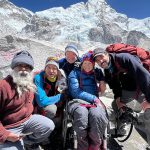
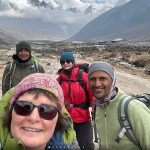
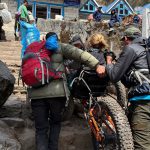
An incredible hike with an amazing group of people. Badri managed to get us in and out of Lukla on days when we thought flights may not be possible and he tried his very best to accommodate the needs of the group. The team of porters supporting Karen Darke were out of this world and did an incredible job, with big smiles. Wonderful people. The trek itself was incredible and we had fantastic weather during the whole trip. Although the ‘B Team’ snail ed it, we had an excellent adventure thanks to Badri and his very supportive team.
Teahouse Treks
Authentic Nepal Trekking
Path shown is illustrative
Does not represent the actual trail
Does not represent the actual trail
Kathmandu - Day 1
1,300m
KathmanduReturn
Sightseeing & trek preparation
Langtang Valley Trek Overview
The Langtang Valley Trek is one of the most beautiful and rewarding short trekking packages in Nepal. This classic 11-day Langtang Valley Trek takes you into a spectacular Himalayan valley of glaciers, ancient forests, yak pastures, and traditional Tamang villages — all within striking distance of Kathmandu.
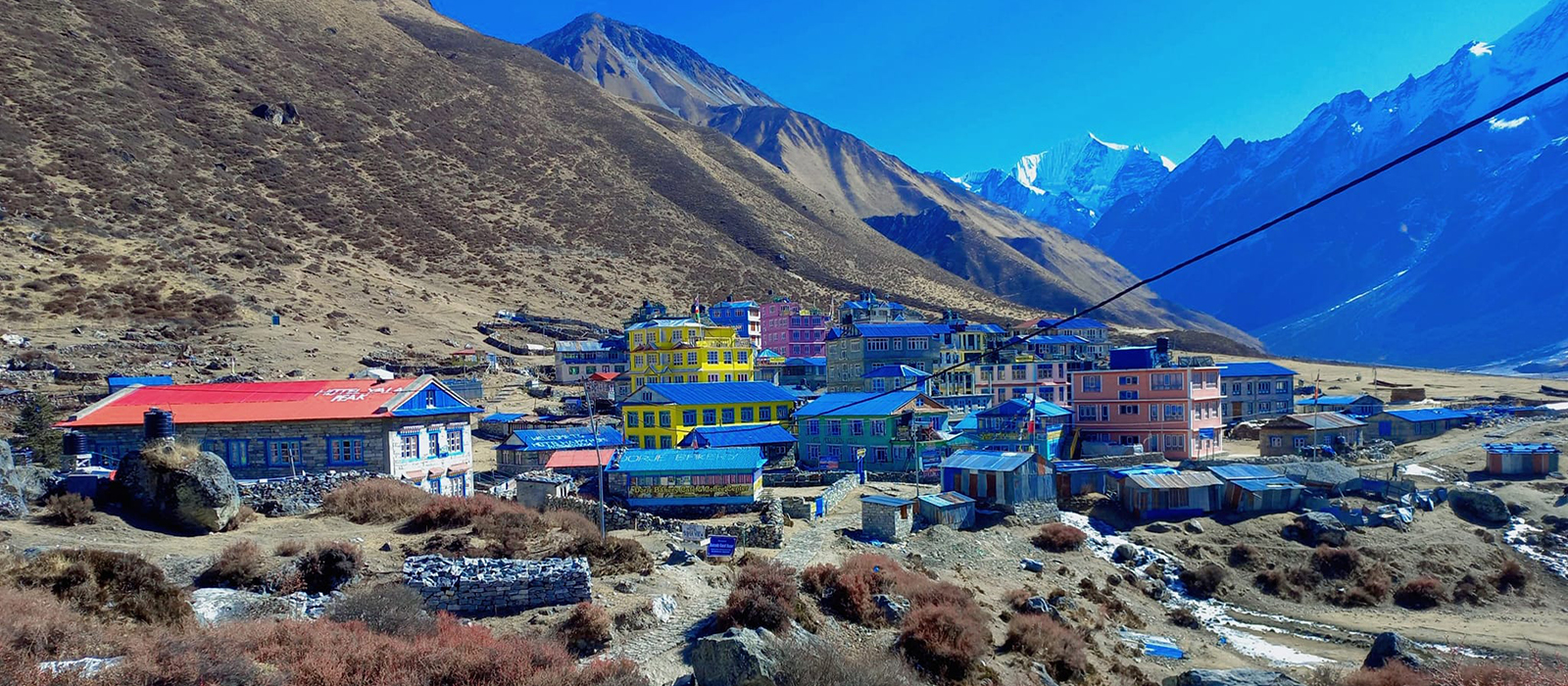
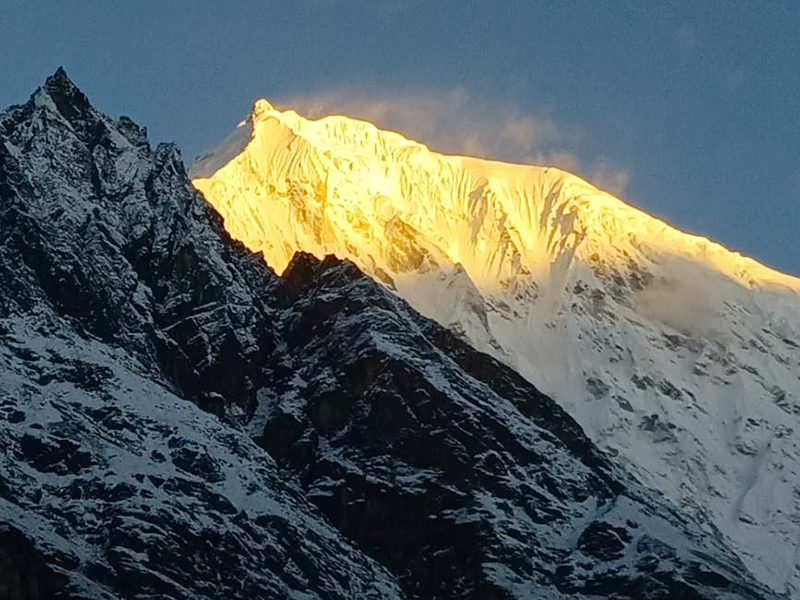
Known as the Scenic Valley of Glaciers, the Langtang Valley sits inside Langtang National Park — Nepal’s fourth largest national park and one of its most ecologically diverse. The valley is flanked by Langtang Lirung (7,227m), Dorje Lakpa, Gangchenpo, and Yala Peak, with glaciers tumbling down from the high ridges above Kyanjin Gompa.
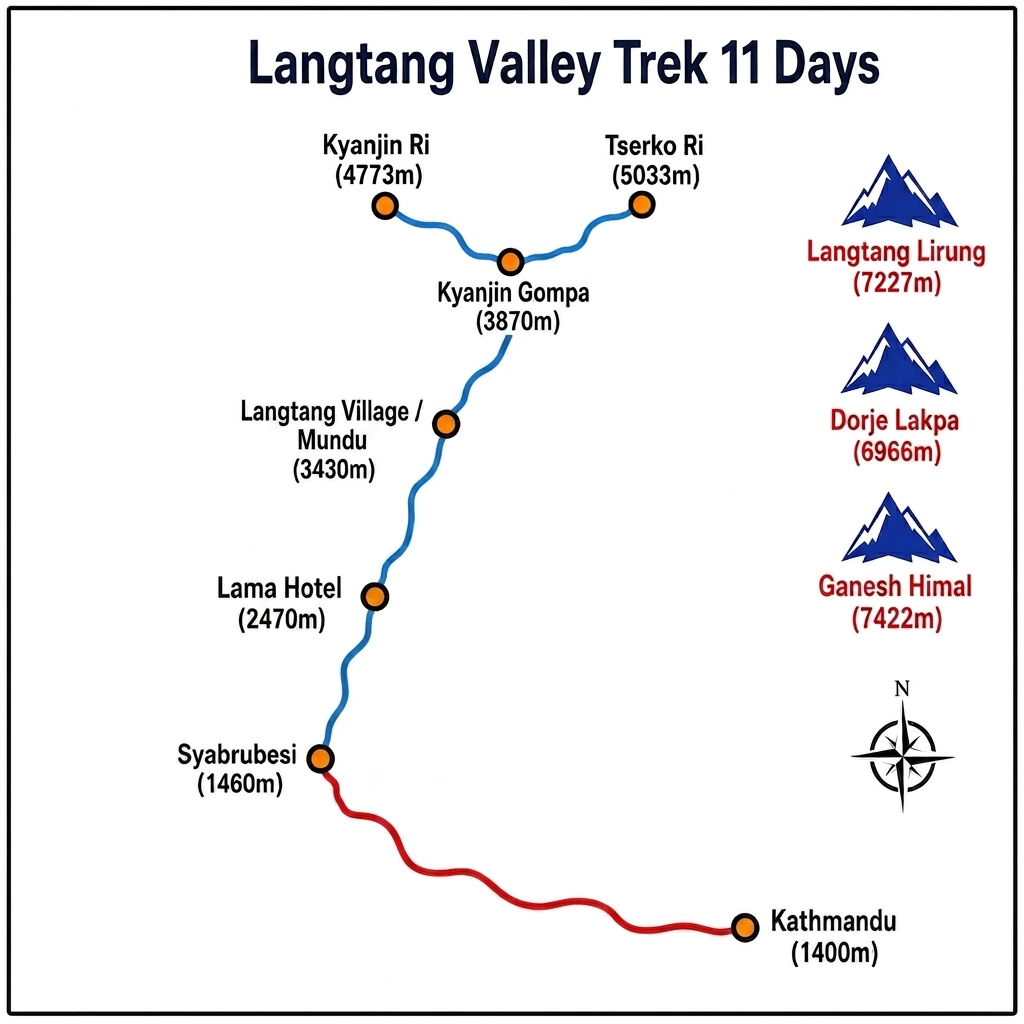
The trek begins with a drive from Kathmandu to Syabrubesi — just a few hours north of the capital — and follows the valley through Lama Hotel, Langtang Village, Mundu, and Kyanjin Gompa, the cultural and geographical heart of the valley. Optional hikes from Kyanjin — to Kyanjin Ri at 4,773m or Tserko Ri at 4,985m — reward strong trekkers with some of the finest panoramic views in the entire region.
The Langtang Valley Trek is ideal for beginners, families with older children, couples, photographers, nature lovers, and travelers who want a genuine Himalayan experience without the crowds of the Everest or Annapurna regions.
You may also consider our Langtang Himal and Gosaikunda Trek if you want to extend the adventure with sacred lakes and high passes.
The Trekking Route
The trek begins with a scenic drive from Kathmandu to Syabrubesi — a hill town at the confluence of the Bhote Koshi and Langtang Khola rivers, and the starting point for all Langtang treks. From Syabrubesi, the trail climbs steadily through dense rhododendron and oak forest along the Langtang Khola river valley.
The first major stop is Lama Hotel — a cluster of tea houses deep in the forest where the valley begins to open up. From there, the trail continues through bamboo groves and past thundering waterfalls to Langtang Village, a traditional Tamang settlement rebuilt after the devastating 2015 earthquake. The resilience and warmth of this community is one of the most memorable aspects of the entire trek.
Above Langtang Village, the valley widens into open meadows and yak pastures as you approach Mundu and Kyanjin Gompa — the highest overnight point at 3,870m. Kyanjin is home to a working cheese factory, an ancient Buddhist gompa, and views of Langtang Lirung and the surrounding glaciers that stop you mid-step.
From Kyanjin, the optional hikes to Kyanjin Ri (4,773m) and Tserko Ri (4,985m) offer extraordinary 360-degree views across the Langtang range and into Tibet. The return follows the same valley trail back to Syabrubesi and the drive to Kathmandu.
Langtang Valley Trek Highlights
- Kyanjin Gompa at 3,870m — the cultural heart of the Langtang Valley
- Optional hike to Kyanjin Ri (4,773m) or Tserko Ri (4,985m) for panoramic Himalayan views
- Views of Langtang Lirung, Dorje Lakpa, Gangchenpo, and Yala Peak
- Walk through dense rhododendron, bamboo, and oak forest inside Langtang National Park
- Experience traditional Tamang culture and Tibetan Buddhist influence
- Visit Kyanjin Gompa monastery and local cheese factory
- Prayer flags, mani walls, chortens, and glaciers throughout the route
- Less crowded than Everest and Annapurna — a quieter Himalayan experience
- Close to Kathmandu — no domestic flight required
- Suitable for beginners and families — no technical climbing required
- Tea house accommodation throughout the trek
Best Time for Langtang Valley Trek
The best time for the Langtang Valley Trek is spring and autumn.
Spring, from March to May, is one of the most beautiful seasons on this route. The rhododendron forests that line the lower valley burst into vivid color, the weather is warm and clear, and the mountain views are sharp in the morning hours before afternoon clouds build.
Autumn, from September to November, is the most popular and reliable trekking season in Nepal. After the monsoon, the air is clean and crisp, the skies are consistently clear, and the views of Langtang Lirung and the surrounding peaks are at their finest. October and November are the ideal months for this trek.
The trek can also be completed in winter (December to February) with proper warm clothing. The valley is quieter, the skies are often crystal clear, and the snow-covered peaks are spectacular — though higher viewpoint hikes to Kyanjin Ri and Tserko Ri can be challenging in heavy snow. The monsoon season from June to August brings heavy rain, leeches, muddy trails, and reduced visibility — generally not recommended.
Trek Difficulty
The Langtang Valley Trek is rated moderate. No technical climbing experience is required, but trekkers should be prepared for daily walking of 5 to 7 hours on forest trails, stone paths, and uphill and downhill gradients.
The highest overnight point is Kyanjin Gompa at 3,870m / 12,697ft. The optional viewpoint hikes push higher — Kyanjin Ri at 4,773m and Tserko Ri at 4,985m are non-technical but demanding half-day hikes that require good fitness and acclimatization. Altitude awareness is important above 3,500m — walk slowly, stay well hydrated, and follow your guide’s advice at all times.
This trek is well suited to active beginners and families with older children. It is less demanding than the Everest Base Camp or Annapurna Base Camp routes and makes an excellent introduction to Himalayan trekking.
Permits Required
The Langtang Valley Trek passes through Langtang National Park, which requires a Langtang National Park Entry Permit. The Nepal Tourism Board lists the entry fee as NPR 3,000 for foreign nationals, NPR 1,500 for SAARC nationals, and NPR 25 for Nepali visitors.
Trekkers also need a TIMS Card and must trek with a licensed guide under Nepal Tourism Board regulations. The Langtang route is one of the regulated trails where all foreign trekkers are required to be accompanied by a licensed guide and carry a trekking-agency-issued TIMS Card.
We arrange all permits, your licensed guide, transportation, accommodation, and full trek logistics before your trip begins — there is nothing you need to organise yourself before leaving home.
Trip Itinerary
Outline Itinerary
• Day 01: Arrival in Kathmandu
• Day 02: Kathmandu Sightseeing and Trek Preparation
• Day 03: Drive from Kathmandu to Syabrubesi
• Day 04: Trek from Syabrubesi to Lama Hotel
• Day 05: Trek from Lama Hotel to Langtang Village / Mundu
• Day 06: Trek from Langtang Village / Mundu to Kyanjin Gompa
• Day 07: Hike to Kyanjin Ri or Tserko Ri and Explore Kyanjin Gompa
• Day 08: Trek from Kyanjin Gompa to Lama Hotel
• Day 09: Trek from Lama Hotel to Syabrubesi
• Day 10: Drive from Syabrubesi to Kathmandu
• Day 11: Final Departure
Details Itinerary
Day 01: Arrival in Kathmandu
Your Langtang Valley Trek begins the moment you land. Badri or his representative will be waiting for you outside arrivals at Tribhuvan International Airport — look for the sign with your name. From there, a short transfer brings you to your hotel in Kathmandu.
After a long flight, the rest of the day is yours to settle in, freshen up, and take your first steps into one of Asia’s most extraordinary cities. In the evening, your guide will sit down with you for a trek briefing — covering the full route, permits, gear, weather, road travel to Syabrubesi, altitude safety, and the daily walking plan. It is a good opportunity to ask any questions before the trek begins.
- Altitude: Kathmandu – 1,300m / 4,260ft
- Transfer Time: approx. 30–45 minutes
- Altitude: Kathmandu – 1,300m / 4,260ft
- Activity: Approx. 4–5 hours sightseeing and preparation
- Lodging: Hotel in Kathmandu
- Inclusions: Welcome Dinner
Day 02: Kathmandu Sightseeing and Trek Preparation
Today is a preparation day in Kathmandu. After breakfast, you can visit famous cultural sites.
Popular options include Swayambhunath, Boudhanath, Pashupatinath, or Kathmandu Durbar Square.
Also, your guide will check your trekking gear. If anything is missing, you can buy or rent it in Thamel.
This day helps you prepare for the Langtang Valley Trek.
• Altitude: Kathmandu – 1,300m / 4,260ft
• Activity Time: Approx. 4–5 hours sightseeing and preparation
- Lodging: Hotel in Kathmandu
- Inclusions: Breakfast
Day 03: Drive from Kathmandu to Syabrubesi
After breakfast, you leave Kathmandu and head north — the city falling away behind you as the road climbs into the hills and the landscape opens up into river valleys, terraced fields, and forested ridges. The route passes through Trishuli and Dhunche before descending to Syabrubesi, a small hill town at the confluence of the Bhote Koshi and Langtang Khola rivers and the gateway to the Langtang Valley.
The drive is long and the road can be rough in sections — this is mountain Nepal, not a highway. But the scenery more than compensates. Pack snacks, enjoy the views, and let the journey do its work of shifting you from city pace to mountain pace.
On arrival in Syabrubesi, check into your lodge, stretch your legs, and rest. Tomorrow the walking begins.
- Altitude: Syabrubesi – approx. 1,460m / 4,790ft
- Drive Time: approx. 7–8 hours depending on road conditions
- Lodging: Tea House / Lodge
- Inclusions: Breakfast, Lunch, Dinner
Day 04: Trek from Syabrubesi to Lama Hotel
After breakfast, the trek begins. The trail drops down to the Langtang Khola river and follows the valley upstream — a long, forested corridor that pulls you deeper into the national park with every step. The sound of the river is constant, the forest is dense and green, and the air is already noticeably cooler and cleaner than Kathmandu.
The route winds through bamboo groves, crosses suspension bridges, and passes through small settlements including Bamboo and Rimche before reaching Lama Hotel — a peaceful cluster of lodges tucked into the forest at the edge of the valley. Despite the name, there is no hotel here in any conventional sense — just simple, welcoming tea houses and the sound of the river below.
This is a long first day on the trail with a mix of uphill and downhill sections. Take it steady, find your rhythm, and let the forest settle around you.
- Altitude: Lama Hotel – approx. 2,470m / 8,104ft
- Trek Time: approx. 6–7 hours
- Lodging: Tea House / Lodge
- Inclusions: Breakfast, Lunch, Dinner
Day 05: Trek from Lama Hotel to Langtang Village / Mundu
After breakfast, the trail climbs steadily out of the forest and the valley begins to open up around you. The trees thin, the views expand, and for the first time you get a proper sense of the scale of the Langtang range — Langtang Lirung and its neighbours filling the skyline ahead as the path winds upward through meadows and open hillside.
You pass through Ghoda Tabela — a former army post now used as a national park checkpoint — before the valley widens dramatically into the broad, glacier-carved landscape that gives Langtang its name. Prayer flags appear on ridgelines, yaks graze in the pastures, and the air carries the particular clarity that only comes above 3,000 metres.
Langtang Village and Mundu are among the most culturally significant stops on the entire trek. Rebuilt after being almost entirely destroyed in the 2015 earthquake, the community here carries its history with extraordinary resilience. Traditional stone houses, mani walls, chortens, and the warmth of Tamang hospitality make this one of the most memorable overnight stops on any Nepal trek.
- Altitude: Langtang Village / Mundu – approx. 3,430m–3,540m / 11,253ft–11,614ft
- Trek Time: approx. 6–7 hours
- Lodging: Tea House / Lodge
- Inclusions: Breakfast, Lunch, Dinner
Day 06: Trek from Langtang Village / Mundu to Kyanjin Gompa
After breakfast, the final push to Kyanjin Gompa begins — and this is one of the finest walking days of the entire trek. The trail is shorter today, which means you can slow down and take it all in.
The path rolls through open valley floor — yak pastures, stone walls, wooden bridges, and chortens strung with prayer flags that snap and flutter in the mountain wind. The valley is wide and unobstructed here, and Langtang Lirung dominates the skyline ahead, its glaciated flanks gleaming above the meadows. Every step feels like walking deeper into something remarkable.
Kyanjin Gompa arrives almost without warning — a small, ancient settlement at 3,870m that has sat in this valley for centuries. The monastery is one of the oldest in the Langtang region, and the local cheese factory — a legacy of Swiss development aid from the 1950s — is still producing yak cheese that you can buy and eat on the spot. In the afternoon, explore the gompa, walk the mani walls, watch the yaks, and let the altitude settle into your body before tomorrow’s viewpoint hike.
- Altitude: Kyanjin Gompa – approx. 3,870m / 12,697ft
- Trek Time: approx. 3–4 hours
- Lodging: Tea House / Lodge
- Inclusions: Breakfast, Lunch, Dinner
Day 07: Hike to Kyanjin Ri or Tserko Ri and Explore Kyanjin Gompa
Wake early. This is the day you came for.
From Kyanjin Gompa, two viewpoint hikes are available — choose based on your fitness, acclimatization, and the weather on the morning.
Kyanjin Ri (4,773m) is the shorter and more accessible option. The ascent takes around 2–3 hours from Kyanjin and the views from the top are extraordinary — Langtang Lirung filling the frame directly ahead, the full sweep of the valley below, and the Tibetan plateau visible on the horizon to the north. This is the right choice for most trekkers and still ranks among the finest viewpoints in the entire Langtang region.
Tserko Ri (4,985m) is longer, higher, and significantly more demanding — a 5–6 hour ascent that pushes well above 4,900 metres. The panorama from the summit is breathtaking, taking in Langtang Lirung, Dorje Lakpa, Gangchenpo, Yala Peak, and the glaciers spilling down from the high ridges in every direction. For fit, well-acclimatized trekkers this is one of the great non-technical high-altitude hikes in Nepal.
Whichever route you choose, return to Kyanjin Gompa for the afternoon. Rest, eat well, and spend a final evening in one of the most peaceful mountain villages in the Himalayas.
- Altitude: Kyanjin Ri – approx. 4,773m / 15,659ft
- Altitude: Tserko Ri – approx. 4,985m / 16,355ft
- Activity Time: Kyanjin Ri approx. 3–5 hours; Tserko Ri approx. 7–10 hours
- Lodging: Tea House / Lodge
- Inclusions: Breakfast, Lunch, Dinner
Day 08: Trek from Kyanjin Gompa to Lama Hotel
After breakfast, you turn and begin the long walk back down the valley. The route is familiar now — Mundu, Langtang Village, Ghoda Tabela, the forest closing back in around you as you descend — but it feels different on the return. The mountains that were ahead of you are now behind, and the valley you spent days walking into unspools quickly beneath your boots.
Descending is easier on the lungs but harder on the legs. The rocky sections and stone paths demand careful footing — trekking poles earn their keep on days like this. Take your time, watch your step, and let the forest draw you back down through its layers.
By the time Lama Hotel appears through the trees, the legs will know they have worked. Rest well — you have earned it.
- Altitude: Lama Hotel – approx. 2,470m / 8,104ft
- Trek Time: approx. 6–7 hours
- Lodging: Tea House / Lodge
- Inclusions: Breakfast, Lunch, Dinner
Day 09: Trek from Lama Hotel to Syabrubesi
After breakfast, the final walking day begins. The trail drops back through the forest the way you came — Rimche, Bamboo, the suspension bridges, the riverside paths along the Langtang Khola — the same route that felt like the beginning of something just a few days ago now feeling like the satisfying close of it.
The forest is as beautiful on the way out as it was on the way in. The river is loud and constant beside you. By the time the trail delivers you back into Syabrubesi, eleven days of Himalayan trekking will have passed through forest, glacier valley, ancient monastery, and high viewpoint — and you will feel every metre of it in the best possible way.
Rest at the lodge, celebrate with your guide and porter, and raise a glass of tea to the mountains you can still see above the treeline.
- Altitude: Syabrubesi – approx. 1,460m / 4,790ft
- Trek Time: approx. 5–6 hours
- Lodging: Tea House / Lodge
- Inclusions: Breakfast, Lunch, Dinner
Day 10: Drive from Syabrubesi to Kathmandu
After breakfast, you climb into the vehicle and begin the long drive back to Kathmandu — the same mountain roads, river valleys, and hill towns that brought you here, now running in reverse. The road can be bumpy and the journey is long, but there is something deeply satisfying about watching the landscape gradually soften from high mountain to lowland valley to city on the way home.
Use the time to rest, reflect, and watch rural Nepal pass by the window one last time. By the time Kathmandu’s streets close in around you, the Langtang Valley will already feel like a place you will want to return to.
In the evening, a farewell dinner with your guide and the team — a chance to share stories, express thanks, and mark the end of a genuinely memorable trek.
- Altitude: Kathmandu – 1,300m / 4,260ft
- Drive Time: approx. 7–8 hours depending on road conditions
- Lodging: Hotel in Kathmandu
- Inclusions: Breakfast, Farewell Dinner
Day 11: Final Departure
Your 11-day Langtang Valley Trek is complete. After breakfast, our team will transfer you to Tribhuvan International Airport for your onward journey — the same arrivals hall you walked through just eleven days ago, now feeling like a different lifetime.
From the forests of the Langtang Khola to the glaciers above Kyanjin Gompa, the sunrise from Kyanjin Ri, and the warmth of the Tamang villages along the way — it has been a remarkable week and a half in the Himalayas.
If you have more time in Nepal, we can arrange an extension — the Langtang Himal and Gosaikunda Trek continues the adventure into sacred lake country, or we can connect you with Kathmandu sightseeing, a Chitwan jungle safari, Pokhara, or a Bhutan tour.
- Altitude: Kathmandu – 1,300m / 4,260ft
- Transfer Time: approx. 30–45 minutes
- Lodging: Not Included
- Inclusions: Breakfast
Cost Details
Cost Includes
• Airport arrival and departure transfer More Info
• Hotel accommodation in Kathmandu More Info
• Welcome dinner in Kathmandu More Info
• Breakfast in Kathmandu More Info
• Kathmandu City Tour
• Tea house / lodge accommodation during the trek More Info
• Breakfast, lunch, and dinner during trekking days More Info
• Licensed trekking guide More Info
• Trekking staff support based on group size
• Porter to carry your gear More Info
• Sagarmatha National Park permit
• Khumbu Pasang Lhamu Rural Municipality Trek Card
• TIMS Card as Required
• High-altitude safety guidance
• Basic first aid support
• Hotel accommodation in Kathmandu More Info
• Farewell dinner in Kathmandu More Info
• Government taxes and official service charges
Cost Excludes
• 4% credit card fee for any portion of payment made by credit card. Cash or wire incurs no extra fees More Info
• Single guest supplement charge. Contact us for exact price More Info
• International airfare More Info
• Nepal visa fee More Info
• Travel insurance More Info
• Personal trekking equipment (rentals readily available for reasonable prices) More Info
• Lunch and dinner in Kathmandu unless mentioned More Info
• Drinks (except tea is included), snacks, hot shower (at higher elevations tea houses), Wi-Fi, battery charging, and personal expenses during trek More Info
• Tips for guide, porter, and trekking staff More Info
• Extra hotel nights caused by early arrival, late departure, flight delay, or weather condition More Info
• Extra cost caused by Lukla flight delay, cancellation, rerouting, or helicopter upgrade More Info
• Additional cost caused by landslide, snow, political strike, road blockage, or natural events More Info
• Emergency rescue, medical treatment, helicopter evacuation, or insurance claim cost More Info
• Any cost caused by itinerary change due to altitude sickness or weather More Info
• Any cost not mentioned in the Cost Includes section
FAQ
Langtang Valley Trek
Is Langtang Valley Trek good for beginners?
Yes. Langtang Valley Trek is good for fit beginners. It is shorter and lower than Everest Base Camp Trek.
How many days is this Langtang Valley Trek package?
This is an 11-day Langtang Valley Trek package. It includes arrival, sightseeing, road transfers, trekking days, Kyanjin Gompa, and final departure.
How high is Kyanjin Gompa?
Kyanjin Gompa is around 3,870m / 12,697ft. It is the highest overnight point of this itinerary.
How high is Kyanjin Ri?
Kyanjin Ri is around 4,773m / 15,659ft. It is a popular viewpoint above Kyanjin Gompa.
How high is Tserko Ri?
Tserko Ri is around 4,985m / 16,355ft. It is a longer and harder viewpoint hike from Kyanjin Gompa.
What is the best time for Langtang Valley Trek?
The best time is spring and autumn. Nepal Tourism Board lists March–May and October–November as the best seasons for Langtang National Park.
What mountains can I see during the trek?
You can see Langtang Lirung, Dorje Lakpa, Gangchenpo, Yala Peak, and other Langtang Himal peaks.
Is Langtang Valley Trek difficult?
It is moderate. The trek includes uphill trails, downhill walking, forest paths, river crossings, and high viewpoint hikes.
Do I need permits for Langtang Valley Trek?
Yes. You need the Langtang National Park Entry Permit and TIMS Card as per current rules.
Do I need a guide for Langtang Valley Trek?
Yes. Nepal Tourism Board lists Langtang Trek under routes requiring a licensed guide and trekking-agency-issued TIMS Card.
What kind of accommodation is available?
Accommodation during the trek is in local tea houses and lodges. In Kathmandu, accommodation is arranged in a hotel.
Do I need travel insurance?
Yes. Travel insurance is strongly recommended. It should cover trekking, medical care, trip delay, and emergency evacuation.
Can families join Langtang Valley Trek?
Yes. Active families can join this trek. However, children should be comfortable walking for several hours daily.
Can travelers from USA, Australia, Canada, and Europe book this trek?
Yes. Travelers from the USA, Australia, Canada, Europe, Asia, and worldwide can book this trek as a private or group joining package.
Can I book a private Langtang Valley Trek?
Yes. This trek can be arranged as a private guided package. It can be customized based on your date, budget, fitness level, and group size.
Can I customize this 11-day itinerary?
Yes. You can add Tamang Heritage Trail, Gosaikunda Lake, extra nights in Kyanjin Gompa, or Kathmandu sightseeing.
Route Map
Gallery
Client Reviews
Mitchedberg
Vicky S
Date of experience: March 2025
Clare B
Date of experience: March 2025
An amazing experience – went trekking with 14 others in March / April 2025 and had a wonderful time. A big thank you to Badri and his crew for taking care of every logistical detail; flights, hotels, transportation in Kathmandu, transportation to and from the airport, money exchanges, restaurant reservations, sightseeing, optimal route pacing, gear transportation, and 100 other small details that would have left me flummoxed.
He and his team allow for a trek that’s as simplified as possible, you can focus your energy on getting to base camp, and they do everything else. They even bring you hot towels and lemon ginger tea at the end of each day (every morning too). I can’t say enough good things about the porters / guides, they were unbelievable, true heroes of our trip. We had some very unique challenges in our group, and without expert guides and porters we would absolutely not have had the same high quality experience. When I go back to Nepal for a second trek, I’m calling Badri. Badri is the guide you want – generous, personal, and you can tell he and his team deeply care about the well-being of their clients.
One more thing: Not once, but twice, Badri got our entire group flown from Kathmandu to Lukla (and back) on days when the weather was uncooperative. Both times, there was only a brief window when the clouds cleared — just enough for a single plane to make the journey — and guess whose plane was first in line? Even more impressive: while we were waiting at the airport, Badri already had a backup helicopter option lined up, just in case the planes didn’t fly. This kind of foresight and preparation gave us total peace of mind.