An incredible hike with an amazing group of people. Badri managed to get us in and out of Lukla on days when we thought flights may not be possible and he tried his very best to accommodate the needs of the group. The team of porters supporting Karen Darke were out of this world and did an incredible job, with big smiles. Wonderful people. The trek itself was incredible and we had fantastic weather during the whole trip. Although the ‘B Team’ snail ed it, we had an excellent adventure thanks to Badri and his very supportive team.
Teahouse Treks
Authentic Nepal Trekking
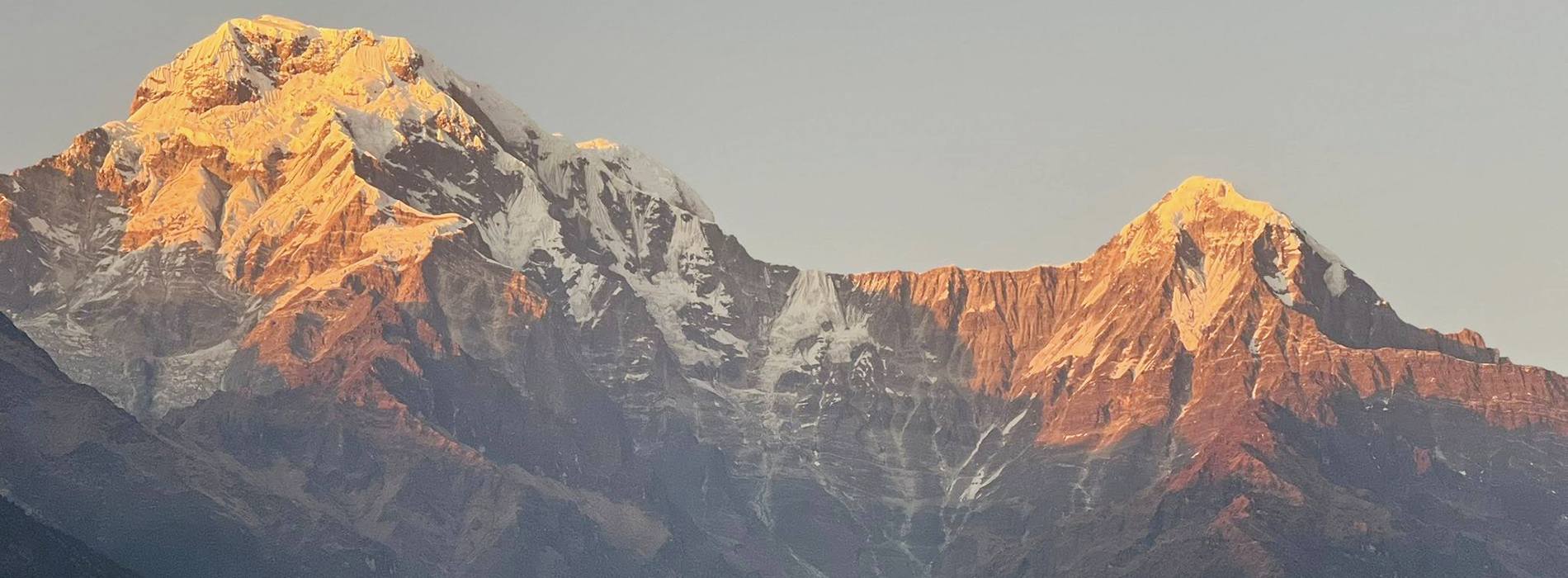
Path shown is illustrative
Does not represent the actual trail
Does not represent the actual trail
Kathmandu - Day 1
1,300m
KathmanduReturn
Drive or fly to Pokhara
Annapurna Base Camp Trek Overview
The Annapurna Base Camp Trek is one of the most famous and rewarding trekking packages in Nepal. This classic 12-day Annapurna Base Camp Trek takes you into the heart of the Annapurna Sanctuary — a breathtaking Himalayan amphitheater surrounded by snow-covered peaks, glaciers, rhododendron forests, rivers, waterfalls, and traditional Gurung villages.
The trek reaches Annapurna Base Camp at 4,130m / 13,550ft, where you stand directly below the great south face of Annapurna I, the world’s 10th highest mountain, with Machhapuchhre / Fishtail, Hiunchuli, Annapurna South, and Gangapurna rising around you in every direction. It is one of the most dramatic mountain settings in the Himalayas — and one of the most accessible.
This 12-day package begins in Kathmandu and continues to Pokhara — Nepal’s most beautiful lakeside city and the gateway to the Annapurna region. From there, the trekking route winds through the Gurung village of Ghandruk, the ridge settlement of Chhomrong, the forest corridors of Bamboo and Deurali, Machhapuchhre Base Camp, and finally Annapurna Base Camp itself. The return route passes through Jhinu Danda, where natural hot springs offer a memorable reward after days on the trail.
The Annapurna Base Camp Trek is suitable for active beginners, couples, families with older children, photographers, nature lovers, and adventure travelers.
You may also consider our Annapurna Circuit Trek for a longer and more challenging adventure, or our Ghorepani Poon Hill Trek if you prefer a shorter introduction to the Annapurna region.
The Trekking Route
The trek begins with a scenic drive or flight* from Kathmandu to Pokhara. From Pokhara, a short drive brings you to the trailhead at Nayapul or Siwai, where the walking begins.
The route climbs through the traditional Gurung village of Ghandruk — one of the most photographed villages in Nepal — before continuing to Chhomrong, the last major settlement before the Annapurna Sanctuary. From Chhomrong, the trail descends into the Modi Khola river valley and enters a spectacular natural corridor flanked by bamboo and rhododendron forest, passing through Bamboo, Doban, and Deurali.
Above Deurali, the landscape opens dramatically as you enter the Annapurna Sanctuary. Machhapuchhre Base Camp sits at 3,700m and offers the first jaw-dropping views of the surrounding peaks. From there, the final push to Annapurna Base Camp at 4,130m is one of the most rewarding walks in all of Nepal.
The return route passes through Bamboo and Jhinu Danda, where you can soak in the famous natural hot springs before the final drive back to Pokhara and Kathmandu.
Annapurna Base Camp Trek Highlights
- Annapurna Base Camp at 4,130m / 13,550ft — inside the Annapurna Sanctuary
- Close-up views of Annapurna I, Annapurna South, Machhapuchhre, Hiunchuli, and Gangapurna
- Sunrise from Annapurna Base Camp surrounded by Himalayan giants
- Visit traditional Gurung villages including Ghandruk and Chhomrong
- Walk through rhododendron, bamboo, and alpine forests
- Pass Machhapuchhre Base Camp on the way up
- Relax at Jhinu Danda natural hot springs on the descent
- Explore Pokhara — Nepal’s most beautiful lakeside city
- Tea house accommodation throughout the trek
- Suitable for active beginners — no technical climbing required
Best Time for Annapurna Base Camp Trek
The best time for the Annapurna Base Camp Trek is spring and autumn.
Spring, from March to May, is one of the most beautiful seasons on this route. The rhododendron forests burst into color, the weather is warm, and the mountain views are often crystal clear in the morning hours. Spring is also the main trekking and expedition season in Nepal.
Autumn, from September to November, is the most popular trekking season in Nepal and the most reliable for clear skies. After the monsoon, the air is clean and sharp, the trails are well-traveled, and the views of Annapurna, Machhapuchhre, and the surrounding peaks are at their best.
The trek can also be completed in December and January with proper warm clothing, though the higher sections near Deurali, Machhapuchhre Base Camp, and Annapurna Base Camp can be cold and snowy. The monsoon season from June to August brings heavy rain, clouds, leeches, and slippery trails — generally not recommended, though the lower sections of the route remain walkable.
Annapurna Base Camp Trek Difficulty
The Annapurna Base Camp Trek is rated moderate. No technical climbing experience is required, but trekkers should be prepared for daily walking of 4 to 7 hours, steep stone staircase sections, forest trails, river crossings, and sustained uphill and downhill gradients.
The highest point is Annapurna Base Camp at 4,130m / 13,550ft. Because the route climbs above 4,000 meters, altitude awareness is important. Walk slowly, stay well hydrated, eat properly, dress in suitable layers, and always follow your guide’s advice on pace and acclimatization.
This trek is well suited to active beginners with good general fitness, but it is more physically demanding than short lower-altitude treks due to the altitude gain and the repeated steep sections between Chhomrong and the Sanctuary. Good preparation before you travel will make a significant difference to your enjoyment on the trail.
Trip Itinerary
Outline Itinerary
- Day 01: Arrive in Kathmandu
- Day 02: Drive or Fly* from Kathmandu to Pokhara
- Day 03: Drive to Nayapul / Siwai and Trek to Ghandruk
- Day 04: Trek from Ghandruk to Chhomrong
- Day 05: Trek from Chhomrong to Bamboo
- Day 06: Trek from Bamboo to Deurali
- Day 07: Trek from Deurali to Annapurna Base Camp via Machhapuchhre Base Camp
- Day 08: Sunrise at Annapurna Base Camp and Trek Down to Bamboo
- Day 09: Trek from Bamboo to Jhinu Danda
- Day 10: Trek to Road Point and Drive to Pokhara
- Day 11: Drive or Fly* from Pokhara to Kathmandu
- Day 12: Final Departure
Details Itinerary
Day 01: Arrive in Kathmandu
Your adventure begins the moment you land at Tribhuvan International Airport. Our representative will be waiting to welcome you and transfer you to your hotel in Kathmandu — the vibrant, chaotic, and incredible gateway to the Himalayas.
Take some time to rest after your flight. In the evening, your guide will sit down with you for a trek briefing. This covers everything you need to know — the route, permits, gear, weather, altitude safety, and daily walking plan. The mountains are waiting. Tomorrow, the journey to Annapurna begins.
Altitude: Kathmandu – 1,300m / 4,260ft
Transfer Time: Approx. 30–45 minutes
- Lodging: Hotel in Kathmandu
- Inclusions: Welcome Dinner
Day 02: Drive or Fly* from Kathmandu to Pokhara
After breakfast, you will travel from Kathmandu to Pokhara — either by scenic mountain flight* or by road through the hills and river valleys of central Nepal. The road journey follows the Prithvi Highway, winding past terraced fields, local market towns, and the rushing Trishuli and Seti rivers. By air, the flight takes just 25 minutes and delivers you straight into one of the most beautiful cities in Asia.
Pokhara sits on the edge of Phewa Lake with the entire Annapurna range reflected on the water on a clear day. It is Nepal’s adventure capital and the main gateway to the Annapurna trekking region. After arriving, check into your hotel, take a walk along Lakeside, check your trekking gear, and get an early night. Tomorrow the trail begins.
Altitude: Pokhara – 820m / 2,690ft
Travel Time: Drive approx. 6–7 hours or flight approx. 25–30 minutes
- Lodging: Hotel in Pokhara
- Inclusions: Breakfast
Day 03: Drive to Nayapul / Siwai and Trek to Ghandruk
After breakfast in Pokhara, a short drive takes you to the trailhead — at Nayapul, Birethanti, or Siwai depending on current road conditions. The moment you step off the vehicle and onto the trail, the Annapurna trek has begun.
The path winds through terraced fields, small farming settlements, and river valleys as it climbs steadily toward Ghandruk. This is one of the largest and most beautiful Gurung villages in the Annapurna region — a hillside settlement of traditional stone houses, marigold gardens, prayer flags, and sweeping mountain views. On a clear afternoon, Machhapuchhre / Fishtail rises dramatically above the village, giving you your first real taste of what lies ahead.
Ghandruk is a wonderful introduction to the people and culture of the Annapurna region. The Gurung people are known for their warmth and hospitality — and their history as legendary Gurkha soldiers. Settle into your tea house, explore the village lanes, and soak in the atmosphere. The real climbing starts tomorrow.
- Altitude: Ghandruk – approx. 1,940m / 6,365ft
- Drive / Trek Time: Drive approx. 2–3 hours; trek approx. 3–5 hours
- Lodging: Tea House / Lodge
- Inclusions: Breakfast, Lunch, Dinner
Day 04: Trek from Ghandruk to Chhomrong
After breakfast, you leave Ghandruk and the trail drops into the valley before climbing steeply back up toward Chhomrong. This section is known for its stone staircase sections — long, relentless, and completely worth it. Along the way, the views of Annapurna South, Hiunchuli, and Machhapuchhre open up with every turn, rewarding the effort with some of the finest mountain scenery on the entire route.
Chhomrong is one of the most important villages on the Annapurna Base Camp trail — the last major Gurung settlement before the trail descends into the deep valley corridor that leads to the Sanctuary. It sits on a dramatic ridge with panoramic views in every direction and a warm, well-established collection of tea houses. From here, the character of the trek changes. The valley narrows, the forest deepens, and the mountains close in around you. Enjoy the view from Chhomrong tonight — it is one of the best on the entire trek.
Altitude: Chhomrong – approx. 2,170m / 7,119ft
Trek Time: Approx. 5–6 hours
- Lodging: Tea House / Lodge
- Inclusions: Breakfast, Lunch, Dinner
Day 05: Trek from Chhomrong to Bamboo
Today the trail descends sharply from Chhomrong on long stone staircases to the Chhomrong Khola river below. Cross the bridge and the climb back up to Sinuwa begins immediately — steep, forested, and atmospheric. This is the rhythm of the Annapurna trail: down to the river, up the other side, deeper into the valley each time.
Beyond Sinuwa the forest takes over completely. Rhododendron, bamboo, and oak close in around the trail as you walk further into the corridor that leads to the Annapurna Sanctuary. The noise of the outside world falls away. The air is cooler and damper, the light filters green through the canopy, and the sense of walking somewhere genuinely remote begins to take hold.
Bamboo is a small, simple collection of tea houses nestled in the forest — exactly the kind of place that makes tea house trekking special. There is nothing here but the river, the trees, the mountains above, and the trail ahead. After the village noise of Ghandruk and Chhomrong, it feels like a different world entirely.
Altitude: Bamboo – approx. 2,310m / 7,579ft
Trek Time: Approx. 5–6 hours
- Lodging: Tea House / Lodge
- Inclusions: Breakfast, lunch, dinner
Day 06: Trek from Bamboo to Deurali
After breakfast, the trail continues deeper into the valley, following the Modi Khola river through some of the most dramatic scenery of the entire trek. The route passes through Dovan and Himalaya — small tea house stops dwarfed by towering rock walls, cascading waterfalls, and forest clinging to near-vertical slopes. The river roars beside you, the cliffs rise above you, and the trail feels increasingly remote with every hour of walking.
As you gain altitude the vegetation begins to thin and change. The dense bamboo and rhododendron forest of the lower valley gives way to more open alpine terrain. The air is noticeably cooler and thinner. Deurali sits at the top of this transition zone — a small cluster of tea houses perched at the point where the valley opens toward the Sanctuary above.
This is an important stop. Tomorrow you enter the Annapurna Sanctuary itself, with Machhapuchhre Base Camp and Annapurna Base Camp both within reach. Rest well, eat well, and drink plenty of water. The best is very close now.
Altitude: Deurali – approx. 3,200m / 10,499ft
Trek Time: Approx. 5–6 hours
- Lodging: Tea House / Lodge
- Inclusions: Breakfast, Lunch, Dinner
Day 07: Trek from Deurali to Annapurna Base Camp via Machhapuchhre Base Camp
Today is the day the entire trek has been building toward. After breakfast, you leave Deurali and the trail climbs into open alpine terrain — the forest is behind you now, the valley widens, and the mountains begin to reveal themselves in full.
The walk to Machhapuchhre Base Camp at 3,700m is stunning. Glacial streams cross the trail, the ground is rocky and open, and Machhapuchhre / Fishtail dominates the sky ahead — so close it feels almost within reach. This sacred peak has never been summited and never will be — Nepal has permanently closed it to climbers out of respect for its spiritual significance. Standing beneath it at its own base camp is a privilege that stops trekkers in their tracks every single time.
From Machhapuchhre Base Camp, the final push to Annapurna Base Camp is an unforgettable walk. The Sanctuary opens up around you like a natural amphitheater — Annapurna I, Annapurna South, Hiunchuli, Gangapurna, and a wall of Himalayan giants encircling you on every side. At 4,130m, you are standing in one of the most dramatic mountain settings on earth.
Take your time here. Breathe it in. Look in every direction. Many trekkers describe this moment as one of the most powerful experiences of their lives — and they are not wrong. Tomorrow brings the sunrise. Tonight, the mountains are all yours.
Altitude: Machhapuchhre Base Camp – approx. 3,700m / 12,139ft; Annapurna Base Camp – 4,130m / 13,550ft
Trek Time: Approx. 5–6 hours
- Lodging: Tea House / Lodge
- Inclusions: Breakfast, Lunch, Dinner
Day 08: Sunrise at Annapurna Base Camp and Trek Down to Bamboo
Wake early. This is a morning you will remember for the rest of your life.
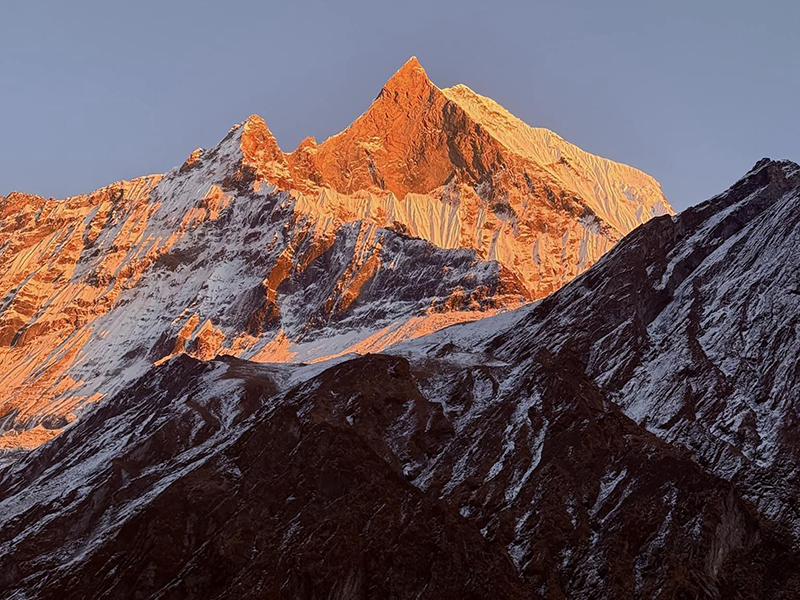
As the first light of dawn touches the peaks of the Annapurna Sanctuary, the snow-covered summits turn from pale grey to deep gold — Annapurna I, Annapurna South, Hiunchuli, Machhapuchhre, Gangapurna — one by one catching the sunrise above you in every direction. At 4,130 meters, surrounded by the highest walls of rock and ice you have ever seen, it is impossible not to feel the full weight of where you are standing.
After breakfast and a final look around, the descent begins. The trail retraces yesterday’s route back through Machhapuchhre Base Camp, Deurali, and into the forested valley below. What took effort to climb feels different on the way down — faster, looser, and with the satisfaction of Annapurna Base Camp already behind you. The changing scenery rewards a second look: the waterfalls, the cliffs, the river, the forest closing back in around you as you drop in altitude.
By the time you reach Bamboo, your legs will know they have worked. Rest well — you have earned it.
Altitude: Bamboo – approx. 2,310m / 7,579ft
Trek Time: Approx. 6–7 hours
- Lodging: Tea House / Lodge
- Inclusions: Breakfast, Lunch, Dinner
Day 09: Trek from Bamboo to Jhinu Danda
After breakfast, the trail climbs back through the forest from Bamboo toward Sinuwa and Chhomrong — retracing familiar ground that feels completely different now that Annapurna Base Camp is behind you. The stone staircases that felt so demanding on the way up are now a satisfying descent, and the views of Annapurna South and Hiunchuli across the valley are as good on the return as they were going in.
From Chhomrong, the trail drops away from the ridge and descends toward the river at Jhinu Danda. And here, after days of altitude, cold nights, and long walking hours, the trail delivers one of its finest rewards.
The natural hot springs at Jhinu Danda sit beside the Modi Khola river, tucked into the hillside with the sound of rushing water all around. Slide in, let the heat work into your legs and back, and look up at the mountains above you. It is one of those rare trekking moments that feels almost too good to be real — and it is completely real.
Altitude: Jhinu Danda – approx. 1,780m / 5,840ft
Trek Time: Approx. 5–6 hours
- Lodging: Tea House / Lodge
- Inclusions: Breakfast, Lunch, Dinner
Day 10: Trek to Road Point and Drive to Pokhara
After breakfast, the final walking section of the Annapurna Base Camp Trek begins. The trail drops from Jhinu Danda toward the valley floor and the nearest road point — at Jhinu, Matkyu, Siwai, or wherever the vehicle can meet you depending on current road conditions. It is a relatively short walk, but there is something bittersweet about it. The mountains are still visible behind you, the river is still rushing below, and the trail that has been your world for the past week is about to end.
Your vehicle will be waiting. The drive back to Pokhara follows the river valley out of the hills and into the lowlands — a gradual return to warmth, noise, traffic, and civilization.
Pokhara receives returning trekkers well. Check back into your hotel, take the longest hot shower of your life, and walk down to Lakeside for dinner. The reflection of the Annapurna range on Phewa Lake — the same peaks you were standing beneath just days ago — is a sight that brings the whole journey full circle. Raise a glass. You trekked to Annapurna Base Camp. Not everyone can say that.
Altitude: Pokhara – 820m / 2,690ft
Trek/Drive Time: Trek approx. 1–3 hours; drive approx. 3–4 hours
- Lodging: Hotel in Pokhara
- Inclusions: Breakfast, Lunch
Day 11: Drive or Fly* from Pokhara to Kathmandu
After breakfast, the journey back to Kathmandu begins — by scenic mountain flight* or by road through the river valleys and terraced hillsides of central Nepal. Whichever way you travel, there is time to reflect on everything the past eleven days have delivered.
Back in Kathmandu, your transfer to the hotel is waiting. The city that felt so overwhelming on Day 1 feels different now — familiar, almost comfortable, and full of places worth one last look. Thamel’s crowded lanes, the temples, the rooftop cafes — all of it hits differently when you have just come down from the Himalayas.
In the evening, a farewell dinner brings the team together one final time. Your guide, who has walked every step of this trek beside you, will be there. It is a good moment to say thank you properly — these are the people who made the experience what it was. Share the stories, look at the photos, and take in the fact that you just completed one of the finest trekking routes in the world.
Altitude: Kathmandu – 1,300m / 4,260ft
Travel Time: Drive approx. 6–7 hours or flight approx. 25–30 minutes
- Lodging: Hotel in Kathmandu
- Inclusions: Breakfast, Farewell Dinner
Day 12: Final Departure
Your 12-day Annapurna Base Camp Trek comes to an end today — but the memories will last a lifetime. Our team will transfer you to Tribhuvan International Airport (KTM) for your final departure.
If you are not ready to leave Nepal just yet, we do not blame you. Popular extensions include the Mardi Himal Trek, Ghorepani Poon Hill Trek, Annapurna Circuit Trek, Chitwan jungle safari, rafting on the Trishuli River, Bhutan tour, or Tibet tour. Nepal has a way of pulling you back — most people who come once find themselves planning their return before they even get home.
Altitude: Kathmandu – 1,300m / 4,260ft
Transfer Time: Approx. 30–45 minutes
- Lodging: Not Included
- Inclusions: Breakfast
Cost Details
Cost Includes
- Airport arrival and departure transfer More Info
- Hotel accommodation in Kathmandu More Info
- Welcome dinner in Kathmandu More Info
- Bus transport to/from Kathmandu to Pokhara (flight option extra $150 each way)
- Hotel accommodation in Pokhara
- Tea house / lodge accommodation during the trek More Info
- Breakfast in Kathmandu and Pokhara More Info
- Breakfast, lunch, and dinner during trekking days More Info
- Licensed trekking guide More Info
- Trekking staff support as per group size
- Porter to carry your gear More Info
- Required trekking permits
- Basic first aid support
- Farewell dinner in Kathmandu More Info
- Government taxes and official service charges
Cost Excludes
*Fly rather then drive to/from Kathmandu to Pokhara ($150 each way)
- International airfare More Info
- Nepal visa fee More Info
- Travel insurance More Info
- Personal trekking equipment More Info
- Lunch and dinner in Kathmandu and Pokhara unless mentioned More Info
- Drinks (except tea or coffee included at meals), snacks, hot shower (at higher elevation tea houses), Wi-Fi, battery charging, and personal expenses during trek More Info
- Tips for guide, porter and trekking staff More Info
- Extra hotel nights caused by early arrival, late departure, road delay, or weather condition More Info
- Additional cost caused by landslide, snow, political strike, road blockage, flight delay, or natural events More Info
- Natural hot spring entry fee if applicable
- Any cost not mentioned in the Cost Includes section
FAQ
Annapurna Base Camp Trek
Is Annapurna Base Camp Trek good for beginners?
Yes, the Annapurna Base Camp Trek is suitable for active beginners with good fitness. You do not need technical climbing experience, but you should be ready for uphill and downhill walking, stone steps, forest trails, and daily walking of around 4 to 7 hours.
How high is Annapurna Base Camp?
Annapurna Base Camp is 4,130 meters / 13,550 feet above sea level. Nepal Tourism Board lists Annapurna Base Camp Trek as reaching the Annapurna Sanctuary at 4,130m.
How many days is this Annapurna Base Camp Trek package?
This is a 12-day Annapurna Base Camp Trek package including arrival in Kathmandu, travel to Pokhara, trekking days, return to Kathmandu, and final departure.
What is the best time for Annapurna Base Camp Trek?
The best time for Annapurna Base Camp Trek is spring from March to May and autumn from September to November. Spring is beautiful for rhododendron flowers, while autumn is popular for clear mountain views.
What mountains can I see during the Annapurna Base Camp Trek?
You can see Annapurna I, Annapurna South, Machhapuchhre / Fishtail, Hiunchuli, Gangapurna, and other peaks of the Annapurna range.
Is Annapurna Base Camp Trek difficult?
The Annapurna Base Camp Trek is moderate. It is not technical, but the route includes long walking days, uphill and downhill trails, stone steps, and high altitude. Good fitness and slow walking are important.
Do I need permits for Annapurna Base Camp Trek?
Yes. Trekkers need the Annapurna Conservation Area Permit / ACAP and a TIMS Card. NTNC lists the ACAP entry fee as NRs. 3,000 for foreigners and NRs. 1,000 for SAARC nationals, tax included.
Do I need a guide for Annapurna Base Camp Trek?
Nepal Tourism Board states that, under the revised TIMS provision effective from March 31, 2023, trekkers on listed protected-area routes need a licensed trekking guide and a trekking-agency-issued TIMS Card.
What kind of accommodation is available during the trek?
Accommodation during the trek is in local tea houses or lodges. Rooms are basic but comfortable. In Kathmandu and Pokhara, accommodation is arranged in hotels.
Can I customize the Annapurna Base Camp Trek itinerary?
Yes. The itinerary can be customized based on your arrival date, fitness level, travel plan, budget, and interest. You can also combine Annapurna Base Camp Trek with Mardi Himal Trek, Ghorepani Poon Hill Trek, Annapurna Circuit Trek, Pokhara tour, or Chitwan jungle safari.
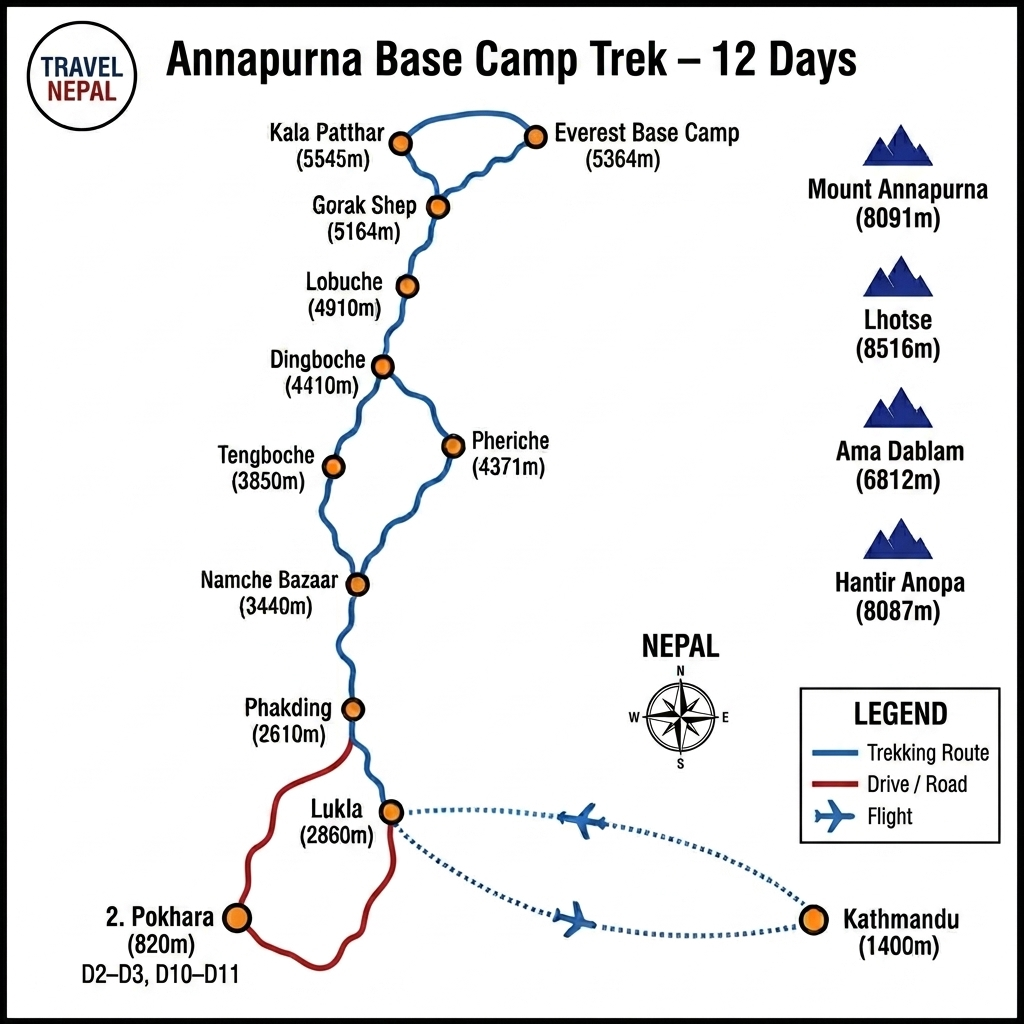
Route Map
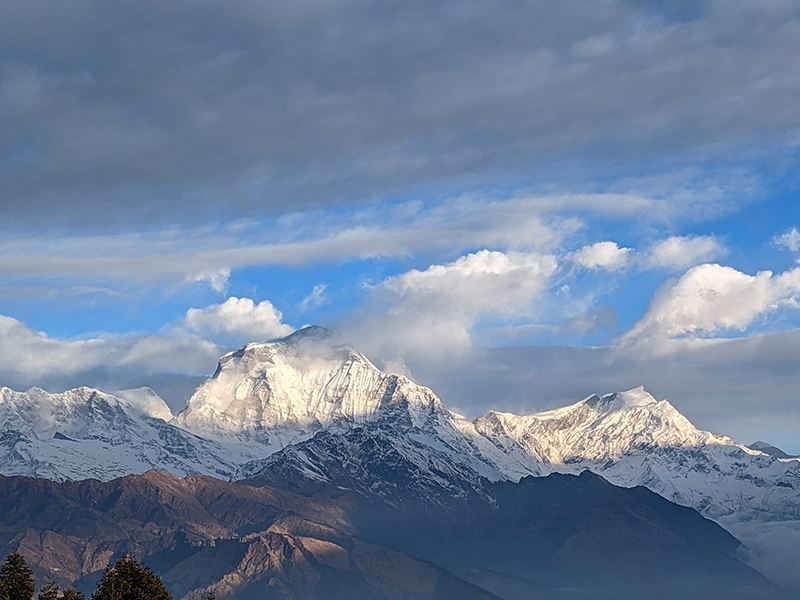
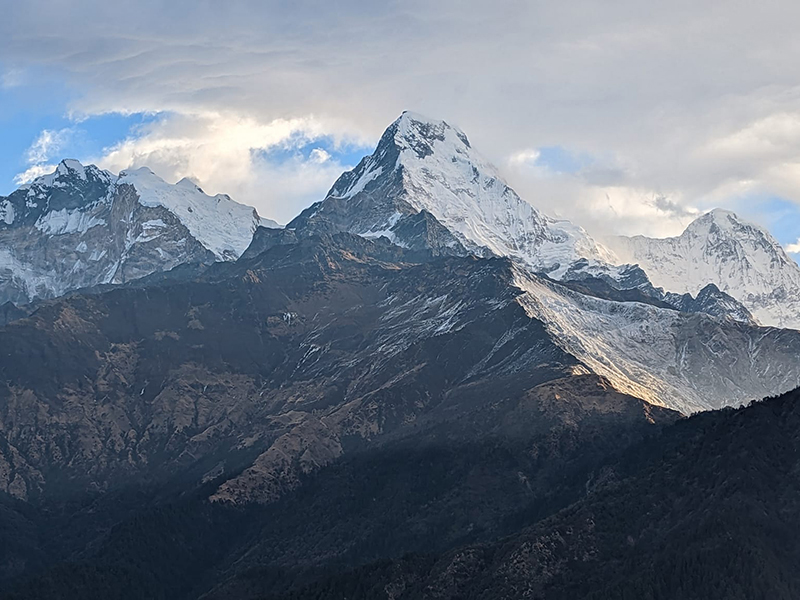
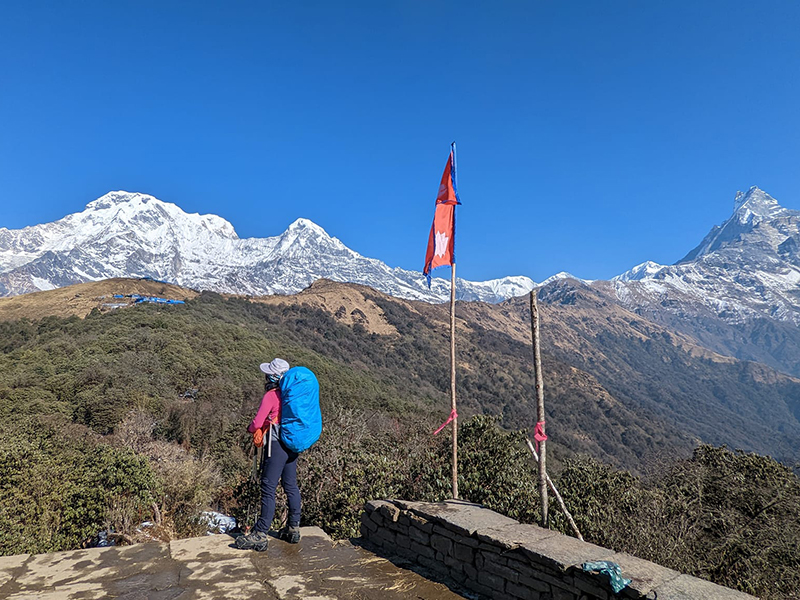
Gallery
Client Reviews
Mitchedberg
Vicky S
Date of experience: March 2025
Clare B
Date of experience: March 2025
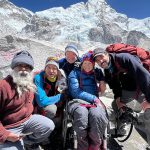
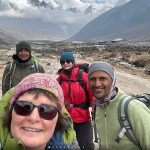
An amazing experience – went trekking with 14 others in March / April 2025 and had a wonderful time. A big thank you to Badri and his crew for taking care of every logistical detail; flights, hotels, transportation in Kathmandu, transportation to and from the airport, money exchanges, restaurant reservations, sightseeing, optimal route pacing, gear transportation, and 100 other small details that would have left me flummoxed.
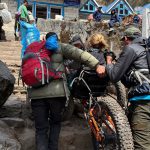
He and his team allow for a trek that’s as simplified as possible, you can focus your energy on getting to base camp, and they do everything else. They even bring you hot towels and lemon ginger tea at the end of each day (every morning too). I can’t say enough good things about the porters / guides, they were unbelievable, true heroes of our trip. We had some very unique challenges in our group, and without expert guides and porters we would absolutely not have had the same high quality experience. When I go back to Nepal for a second trek, I’m calling Badri. Badri is the guide you want – generous, personal, and you can tell he and his team deeply care about the well-being of their clients.
One more thing: Not once, but twice, Badri got our entire group flown from Kathmandu to Lukla (and back) on days when the weather was uncooperative. Both times, there was only a brief window when the clouds cleared — just enough for a single plane to make the journey — and guess whose plane was first in line? Even more impressive: while we were waiting at the airport, Badri already had a backup helicopter option lined up, just in case the planes didn’t fly. This kind of foresight and preparation gave us total peace of mind.