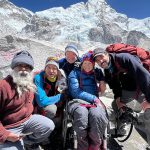
An incredible hike with an amazing group of people. Badri managed to get us in and out of Lukla on days when we thought flights may not be possible and he tried his very best to accommodate the needs of the group. The team of porters supporting Karen Darke were out of this world and did an incredible job, with big smiles. Wonderful people. The trek itself was incredible and we had fantastic weather during the whole trip. Although the ‘B Team’ snail ed it, we had an excellent adventure thanks to Badri and his very supportive team.
Teahouse Treks
Authentic Nepal Trekking
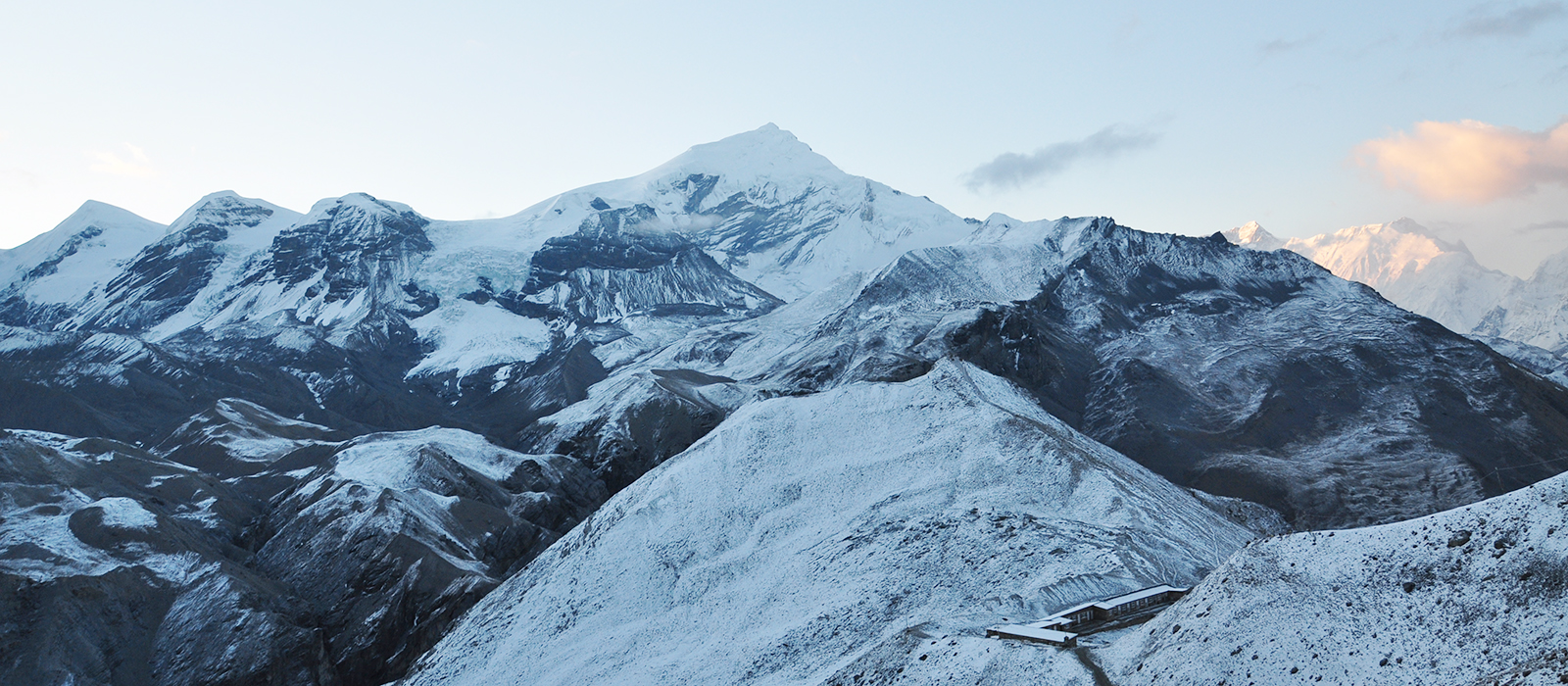
Annapurna Circuit Trek Overview
The Annapurna Circuit Trek is one of the most celebrated trekking routes on earth. This classic 16-day Annapurna Circuit Trek takes you on a complete loop around the Annapurna massif — crossing the legendary Thorong La Pass at 5,416m / 17,769ft, walking through ancient Gurung, Manangi, and Thakali villages, and finishing with a sunrise at Poon Hill before returning through Pokhara.
What sets the Annapurna Circuit apart from any other trek in Nepal is its extraordinary variety. In a single journey you move through subtropical river valleys, dense rhododendron forests, terraced hillside villages, dry Tibetan-influenced highland terrain, a sacred Hindu and Buddhist pilgrimage site at Muktinath, natural hot springs at Tatopani, and one of the finest sunrise viewpoints in the Himalayas at Poon Hill. No other Nepal trek covers so much ground in so many different landscapes.
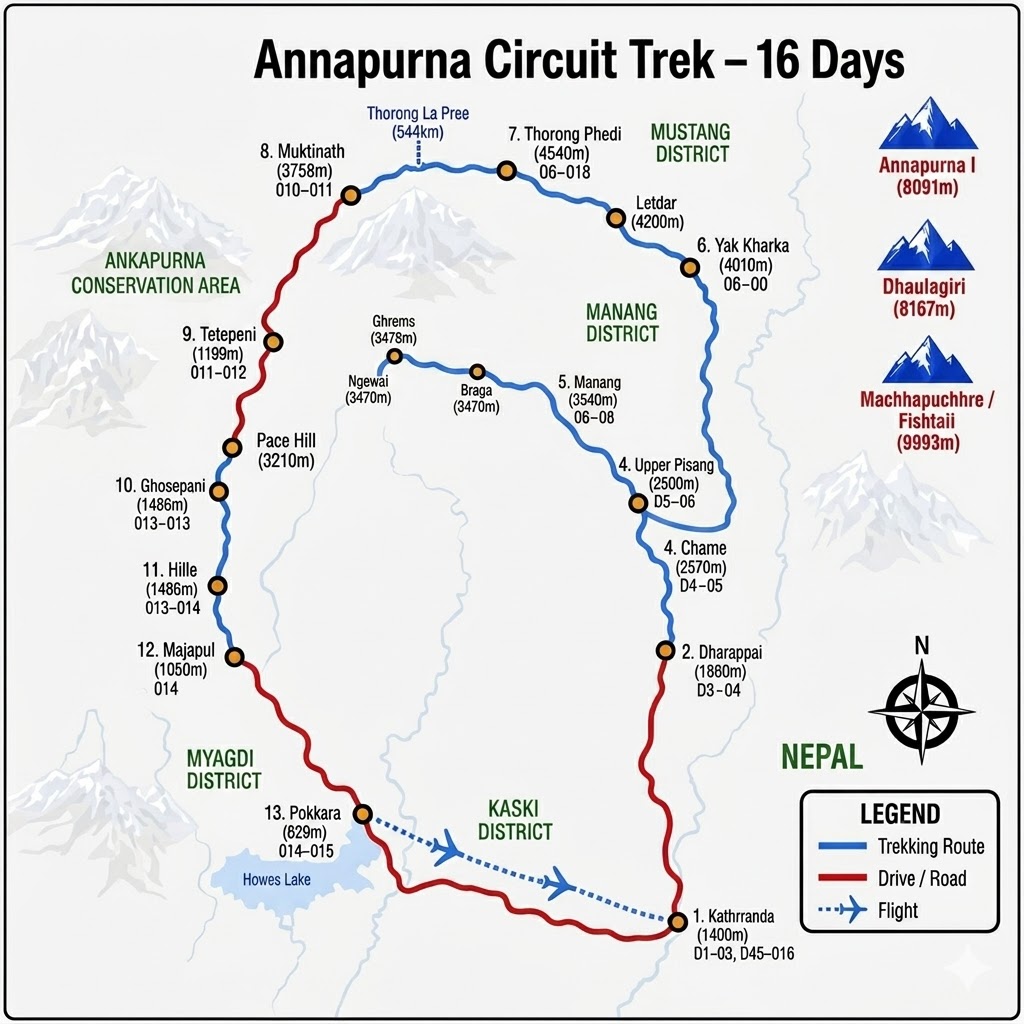
The trek begins in Kathmandu with a drive to Dharapani, where the walking starts along the Marsyangdi River valley. The route climbs through Chame, Upper Pisang, Ngawal, Braga, and Manang before pushing higher to Yak Kharka and Thorong Phedi — the staging point for the high pass crossing. After Thorong La, the trail descends dramatically into Muktinath and the Mustang region, then winds back south through Tatopani, Ghorepani, and Poon Hill before finishing in Pokhara.
The Annapurna Circuit Trek is suitable for active trekkers, fit beginners with good preparation, couples, photographers, and adventure travelers who want one of Nepal’s most complete Himalayan experiences.
You may also consider our Annapurna Base Camp Trek for a shorter route into the heart of the Sanctuary, or our Ghorepani Poon Hill Sunrise Trek for a shorter beginner-friendly introduction to the Annapurna region.
The Trekking Route
The trek begins with a drive from Kathmandu to Dharapani — the road following river valleys and hill towns north into the Annapurna region. From Dharapani, the trail follows the Marsyangdi River upstream through Chame and into the high Manang Valley — a spectacular deep gorge that gradually opens into the wide, dry landscape of the upper circuit.
Upper Pisang, Ghyaru, Ngawal, and Braga are some of the most striking villages on the entire route — stone houses stacked against cliff faces, prayer flags snapping in the wind, ancient gompas perched above the valley floor. Manang at 3,519m is the acclimatization stop, and a rest day here is essential before the push toward the pass.
From Manang, the trail climbs through Yak Kharka and Thorong Phedi before the pre-dawn start for Thorong La Pass at 5,416m — the dramatic high point of the entire circuit. The descent to Muktinath is long and steep, dropping you into the sacred pilgrimage town where Hindu and Buddhist traditions converge at one of Nepal’s most revered temples.
The return leg winds south through the Mustang region and Tatopani — famous for its natural hot springs — before climbing back into the rhododendron forests above Ghorepani and the sunrise viewpoint at Poon Hill at 3,210m. From there the trail descends to Nayapul and Pokhara, Nepal’s most beautiful lakeside city, before the return to Kathmandu.
Annapurna Circuit Trek Highlights
- Thorong La Pass at 5,416m / 17,769ft — one of the highest trekking passes in the world
- Manang Valley — dramatic high-altitude landscape with Tibetan cultural influence
- Muktinath — sacred pilgrimage site revered by both Hindus and Buddhists
- Sunrise from Poon Hill at 3,210m — panoramic views of Annapurna, Dhaulagiri, and Machhapuchhre
- Natural hot springs at Tatopani after the high-pass crossing
- Views of Annapurna II, III, IV, Gangapurna, Tilicho Peak, Dhaulagiri, Manaslu, and Machhapuchhre
- Walk through Gurung, Manangi, Thakali, and Magar villages
- Extraordinary variety of landscapes — subtropical valleys to high alpine desert
- Explore Pokhara — Nepal’s most beautiful lakeside city
- Tea house accommodation throughout the trek
- No technical climbing required
Best Time for Annapurna Circuit Trek
The best time for the Annapurna Circuit Trek is spring and autumn.
Spring, from March to May, is one of the most beautiful seasons on this route. The rhododendron forests on the lower trail burst into vivid color, the weather is warm at lower elevations, and the mountain views are often crystal clear in the morning hours.
Autumn, from September to November, is the most popular and reliable trekking season in Nepal. After the monsoon, the air is clean and sharp, the skies are consistently clear, and the views of Annapurna, Dhaulagiri, and the surrounding peaks are at their finest. October and November are the ideal months for the Thorong La crossing.
The trek can also be completed in winter (December to February) with proper cold-weather gear, though Thorong La Pass can carry significant snow and ice and temperatures at the pass and in Manang can be extreme. The monsoon season from June to August brings heavy rain, landslides, and slippery trails on the lower sections — generally not recommended, though the upper Mustang section sits in a partial rain shadow.
Trek Difficulty
The Annapurna Circuit Trek is rated moderate to challenging. No technical climbing experience is required, but trekkers should be prepared for long walking days of 5 to 8 hours, significant altitude gain, cold conditions above 4,000m, and the demanding Thorong La Pass crossing at 5,416m.
The highest point is Thorong La Pass at 5,416m / 17,769ft. The crossing is a long, strenuous day — typically starting before dawn from Thorong Phedi — with a steep ascent followed by an equally steep descent to Muktinath. Good cardiovascular fitness, proper layering, and a slow steady pace are essential. The acclimatization day in Manang is built into the itinerary for this reason and should not be rushed.
Walk slowly, stay well hydrated, eat well, and always follow your guide’s advice. If you are new to high altitude, take the rest day in Manang seriously — it makes all the difference on pass day.
Permits Required
The Annapurna Circuit Trek passes through the Annapurna Conservation Area, which requires the Annapurna Conservation Area Permit (ACAP).
Trekkers also need a TIMS Card and must trek with a licensed guide under Nepal Tourism Board regulations. The Annapurna Circuit is one of the regulated routes where all foreign trekkers are required to be accompanied by a licensed guide and carry a trekking-agency-issued TIMS Card.
We arrange all permits, your licensed guide, transportation, accommodation, and full trek logistics before your trip begins — there is nothing you need to organise yourself before leaving home.
Trip Itinerary
Outline Itinerary
Day 01: Arrival at Kathmandu Tribhuvan International Airport
Day 02: Kathmandu Valley Sightseeing or Leisure Day
Day 03: Drive from Kathmandu to Dharapani
Day 04: Trek from Dharapani to Chame
Day 05: Trek from Chame to Upper Pisang
Day 06: Trek from Upper Pisang to Manang via Ghyaru, Ngawal and Braga
Day 07: Acclimatization Day in Manang
Day 08: Trek from Manang to Yak Kharka via Ghyanchang
Day 09: Trek from Yak Kharka to Thorong Phedi via Letdar
Day 10: Cross Thorong La Pass and Trek to Muktinath
Day 11: Drive from Muktinath to Tatopani
Day 12: Trek from Tatopani to Ghorepani
Day 13: Hike to Poon Hill and Trek to Hille
Day 14: Trek from Hille to Nayapul and Drive to Pokhara
Day 15: Drive or Fly* from Pokhara to Kathmandu
Day 16: Final Departure
Details Itinerary
Day 01: Arrival in Kathmandu
Your Annapurna Circuit Trek begins the moment you land. Badri or his representative will be waiting for you outside arrivals at Tribhuvan International Airport — look for the sign with your name. From there, a short transfer brings you to your hotel in Kathmandu.
After a long flight, the rest of the day is yours to settle in and take your first steps into one of Asia’s most extraordinary cities. In the evening, your guide will sit down with you for a trek briefing — covering the full circuit route, daily walking hours, road transfers, tea house accommodation, meals, permits, weather, altitude safety, and what to expect on the trail ahead. It is a good opportunity to ask any questions before the journey begins.
- Altitude: Kathmandu – 1,300m / 4,260ft
- Transfer Time: approx. 30–45 minutes
- Lodging: Hotel in Kathmandu
- Inclusions: Welcome Dinner
Day 02: Kathmandu Valley Sightseeing or Leisure Day
After breakfast, the day is yours — use it to explore Kathmandu or rest before the circuit begins. If you want to get out into the city, the most rewarding options are close together: Swayambhunath, the ancient hilltop stupa with sweeping views over the valley; Boudhanath, one of the largest Buddhist stupas in the world; Pashupatinath, Nepal’s most sacred Hindu temple on the banks of the Bagmati River; and Kathmandu Durbar Square, a UNESCO World Heritage Site at the heart of the old city.
If you prefer a quieter day, rest, explore Thamel at your own pace, or get an early night before the drive tomorrow.
Either way, your guide will check your trekking gear and make sure everything is in order before you leave. If anything is missing — a warmer layer, rain jacket, trekking poles, or socks — Thamel has everything you need within walking distance of your hotel.
- Altitude: Kathmandu – 1,300m / 4,260ft
- Activity Time: approx. 4–5 hours sightseeing or free day
- Lodging: Hotel in Kathmandu
- Inclusions: Breakfast
Day 03: Drive from Kathmandu to Dharapani
After breakfast, you leave Kathmandu and head west on the Prithvi Highway — the road following the Trishuli River through gorges, terraced hillsides, and market towns before turning north toward Besisahar and the Marsyangdi River valley. From Besisahar, the road narrows and the vehicle changes — jeep or local transport from here, depending on road conditions — as the route pushes deeper into the hills toward Dharapani.
This is a long travel day and the road can be rough in the upper sections. But the scenery more than compensates — river valleys, forested ridges, cascading waterfalls, and the first distant glimpses of snow-capped peaks ahead. Pack snacks, settle in, and let Nepal’s extraordinary hill country unfold around you.
Dharapani sits at the junction of the Marsyangdi and Dudh Khola rivers and marks one of the main entry points onto the Annapurna Circuit trail. Arrive, check into your lodge, and rest — tomorrow the walking begins in earnest.
- Altitude: Dharapani – 1,860m / 6,100ft
- Drive Time: approx. 8–10 hours depending on road conditions
- Lodging: Tea House / Lodge
- Inclusions: Breakfast, Lunch, Dinner
Day 04: Trek from Dharapani to Chame
After breakfast, the Annapurna Circuit begins in earnest. The trail follows the Marsyangdi River upstream — a well-established path that winds through pine and rhododendron forest, past thundering waterfalls, and through a series of small settlements that grow quieter and more Tibetan in character as you gain altitude.
You pass through Bagarchhap, Danaque, Timang, and Koto — each a cluster of stone houses and tea houses tucked into the valley, prayer flags marking the trail above. The landscape shifts noticeably on this section, the lush green of the lower hills giving way to cooler, drier alpine terrain as the valley narrows and the peaks close in.
Chame arrives as a welcome sight — the district headquarters of Manang, a proper mountain town with government offices, bakeries, gear shops, and the first dramatic views of Lamjung Himal and Annapurna II rising above the valley. It is a good place to check your gear, pick up any supplies, and settle in for the night.
- Altitude: Chame – 2,700m / 8,860ft
- Trek Time: approx. 5–6 hours
- Lodging: Tea House / Lodge
- Inclusions: Breakfast, Lunch, Dinner
Day 05: Trek from Chame to Upper Pisang
After breakfast, the trail pushes deeper into the Marsyangdi valley — the landscape growing wilder and more dramatic with every hour. The path winds through dense pine forest, crosses narrow gorges, and passes through apple-growing settlements where the trees line the trail in spring blossom. Bhratang and Dhukur Pokhari are quiet stops along the way before the valley opens into the wide, dry expanse that signals your arrival in the upper circuit.
The choice at Pisang is worth making deliberately — Lower Pisang is the easier stop, but Upper Pisang, perched on the hillside above, is the right call. The traditional stone houses, ancient gompa, and unobstructed views of Annapurna II and Pisang Peak make it one of the finest overnight stops on the entire circuit. The air is noticeably thinner now and the Tibetan influence in the architecture and culture is unmistakable.
Take the climb up to Upper Pisang slowly — you are at 3,300m and the altitude will remind you if you rush.
- Altitude: Upper Pisang – approx. 3,300m / 10,827ft
- Trek Time: approx. 5–6 hours
- Lodging: Tea House / Lodge
- Inclusions: Breakfast, Lunch, Dinner
Day 06: Trek from Upper Pisang to Manang via Ghyaru, Ngawal and Braga
After breakfast, you take the high route — and it is the right decision. The upper trail climbs steeply from Pisang onto a high ridge path that rewards every metre of effort with some of the most breathtaking mountain views on the entire Annapurna Circuit.
Ghyaru is the first stop — a traditional Tibetan-influenced village clinging to the hillside at 3,670m, its stone houses and prayer flags framed against a wall of Himalayan giants. Annapurna II, III, and IV, Gangapurna, Tilicho Peak, and Pisang Peak fill the horizon in a single sweeping panorama. It is the kind of view that stops conversation entirely.
The trail continues to Ngawal — equally beautiful, equally quiet, and equally far from the crowds on the lower road route below. From Ngawal, the path descends toward Braga, home to one of the oldest and most impressive gompas on the circuit — a monastery stacked into the cliff face above the village with hundreds of clay statues inside dating back centuries. Take the time to visit if it is open.
From Braga, Manang is a short walk. At 3,500m, Manang is the last major town before the high pass and the place where the circuit takes a breath. Gear shops, bakeries, altitude clinics, and the Himalayan Rescue Association office are all here — make use of them.
- Altitude: Ghyaru – approx. 3,670m / 12,040ft
- Altitude: Ngawal – approx. 3,660m / 12,008ft
- Altitude: Braga – approx. 3,470m / 11,390ft
- Altitude: Manang – approx. 3,500m / 11,480ft
- Trek Time: approx. 7–8 hours
- Lodging: Tea House / Lodge
- Inclusions: Breakfast, Lunch, Dinner
Day 07: Acclimatization Day in Manang
Today you stay in Manang — and this is one of the most important days of the entire trek. You are above 3,500m, Thorong La Pass is two days ahead, and the golden rule of high-altitude trekking applies without exception: climb high, sleep low, and never skip your acclimatization day.
The morning is for a short hike. The most popular options are Gangapurna Lake — a stunning glacial lake just above the village with close-up views of Gangapurna’s ice face — or the short climb to Bhojo Gompa, an ancient monastery perched on the ridge above Manang with wide views over the valley and the peaks beyond. Either way, you gain some altitude and come back down to sleep — exactly what your body needs.
The afternoon is yours. Visit the Himalayan Rescue Association office in the village for their daily altitude sickness talk — it is free, informative, and genuinely useful before you head toward the pass. Browse the gear shops if you need extra layers. Eat well, drink plenty of water, and resist the temptation to push on ahead of schedule. The trekkers who respect this day are the ones who cross Thorong La without difficulty.
- Altitude: Manang – approx. 3,500m / 11,480ft
- Activity Time: approx. 2–4 hours light hiking and village exploration
- Lodging: Tea House / Lodge
- Inclusions: Breakfast, Lunch, Dinner
Day 08: Trek from Manang to Yak Kharka via Ghyanchang
After breakfast, you leave Manang and the trail begins its serious climb toward the pass. The landscape changes immediately — the last of the trees fall away and you enter the high alpine zone, a wide open world of dry grassland, rocky ridgelines, and yak grazing pastures stretching up toward the snowline.
The walking is steady and unhurried today — deliberately so. You are climbing from 3,500m toward 4,050m and every step counts. Ghyanchang is a quiet waypoint on the route, and Yak Kharka — little more than a handful of tea houses in an open highland bowl — is the overnight stop. Basic, peaceful, and exactly what you need the night before the final push to Thorong Phedi.
Eat a good dinner, drink plenty of water, and get to bed early. Tomorrow is a short day but an important one — you want to arrive at Thorong Phedi well rested and ready for an early start on pass day.
- Altitude: Ghyanchang – approx. 4,000m / 13,120ft
- Altitude: Yak Kharka – approx. 4,050m / 13,290ft
- Trek Time: approx. 4–5 hours
- Lodging: Tea House / Lodge
- Inclusions: Breakfast, Lunch, Dinner
Day 09: Trek from Yak Kharka to Thorong Phedi via Letdar
After breakfast, the trail continues its steady climb toward the base of the pass. The terrain is fully alpine now — exposed ridgelines, narrow paths cut into steep hillsides, river crossings, and sections where the trail edges past landslide-prone slopes that demand careful footwork and full attention.
Letdar is a quiet stop along the way at 4,200m before the final descent and re-climb to Thorong Phedi — the last tea house settlement before the pass, sitting in a tight valley at 4,540m with the great wall of the mountain rising directly above.
Thorong Phedi is basic but purposeful. Everyone here has one thing on their mind — the crossing tomorrow. Your guide will assess your condition, check the weather forecast, and confirm the plan for the morning. Eat a proper meal, drink water steadily through the afternoon, lay out your warmest layers for the pre-dawn start, and get to sleep as early as you can.
The alarm will come early.
- Altitude: Letdar – approx. 4,200m / 13,780ft
- Altitude: Thorong Phedi – approx. 4,540m / 14,900ft
- Trek Time: approx. 4–5 hours
- Lodging: Tea House / Lodge
- Inclusions: Breakfast, Lunch, Dinner
Day 10: Cross Thorong La Pass and Trek to Muktinath
The alarm goes off before dawn. This is the day.
You leave Thorong Phedi in the dark — headtorch on, layers stacked, the cold air sharp in your lungs — and begin the long climb to the pass. The trail switchbacks steeply up the face of the mountain, the darkness gradually giving way to a cold grey dawn as you gain altitude. The wind picks up. The snow crunches underfoot. Every step is deliberate and slow — this is not a day to rush.
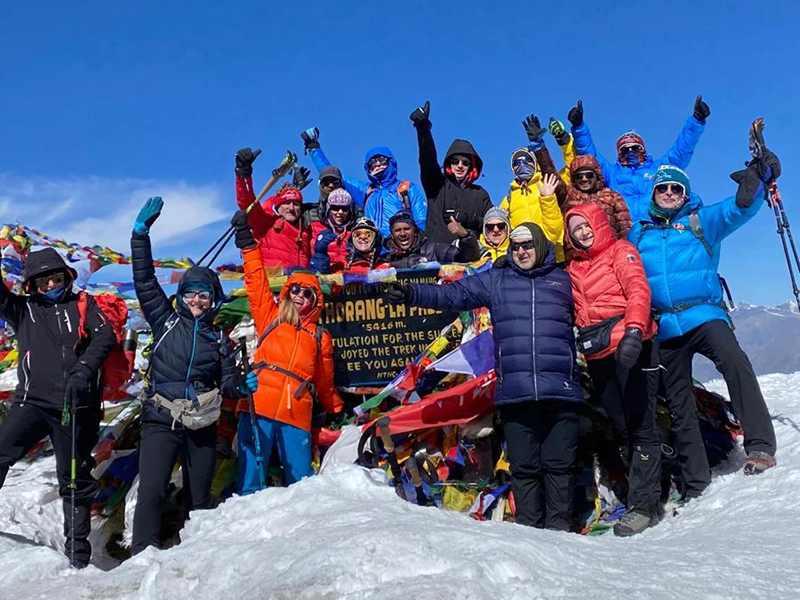
Thorong La Pass at 5,416m / 17,769ft arrives like a release. Prayer flags thrash in the wind, cairns mark the high point, and the view opens in every direction — the Annapurna range behind you, the vast brown landscape of the Mustang stretching ahead, and somewhere far below, Muktinath waiting at the end of a very long descent. Take your photos, breathe it in, and feel justifiably proud. You have just crossed one of the highest trekking passes in the world.
The descent to Muktinath is long, steep, and hard on the knees — trekking poles earn their keep on this section. The landscape shifts dramatically as you drop into the Mustang rain shadow, the green alpine world replaced by dry ochre cliffs and wide open desert valley. Muktinath at 3,800m is a sacred site where a single temple serves both Hindu and Buddhist pilgrims — one of the most remarkable religious confluences in the Himalayas. Visit the temple if you have energy, then rest. You have earned it.
- Altitude: Thorong La Pass – 5,416m / 17,769ft
- Altitude: Muktinath – approx. 3,800m / 12,470ft
- Trek Time: approx. 8–10 hours
- Lodging: Tea House / Lodge
- Inclusions: Breakfast, Lunch, Dinner
Day 11: Drive from Muktinath to Tatopani
After breakfast — and a final look at Muktinath in the morning light — you board a vehicle and begin the long descent through the Kali Gandaki valley. This is one of the deepest gorges on earth, flanked by Annapurna and Dhaulagiri, and the drive through it is extraordinary.
The route passes through Kagbeni — a medieval walled town at the gateway to Upper Mustang — then Jomsom, the main administrative centre of the Mustang region, before continuing south through Marpha, famous for its apple brandy and whitewashed stone lanes, and the quieter villages of Tukuche, Kalopani, and Ghasa. The landscape transforms dramatically as you descend — the dry, wind-scoured desert of the upper Mustang giving way to green terraced hillsides and the sound of the river rushing beside the road.
Tatopani sits at just 1,190m — a drop of over 2,600m from where you woke up this morning. The name means “hot water” in Nepali, and the natural hot springs here are exactly what two days of high-altitude exertion and a 10-hour pass crossing call for. Soak as long as you like.
- Altitude: Tatopani – approx. 1,190m / 3,900ft
- Drive Time: approx. 5–7 hours depending on road conditions
- Lodging: Tea House / Lodge
- Inclusions: Breakfast, Lunch, Dinner
Day 12: Trek from Tatopani to Ghorepani
After breakfast, you leave the hot springs behind and begin the long climb back into the hills. After yesterday’s descent into the valley floor, today reverses the direction — the trail climbing steadily through terraced fields, stone-paved village paths, and increasingly dense forest as you gain altitude through Ghara, Shikha, and Chitre.
It is a long uphill day and the legs will know it — but the scenery pulls you forward. The dry Mustang landscapes of the past two days are gone, replaced by the lush green hill country of the lower Annapurna region, rhododendron forests closing in around the trail as you approach Ghorepani. In spring the rhododendrons are in full bloom — deep red and pink against the green — and the forests feel almost impossibly beautiful.
Ghorepani sits at 2,880m in a saddle surrounded by forest, a busy and welcoming mountain village with good tea houses and one very important reason everyone is here — the alarm is already set for tomorrow morning’s pre-dawn hike to Poon Hill.
- Altitude: Ghorepani – approx. 2,880m / 9,450ft
- Trek Time: approx. 6–7 hours
- Lodging: Tea House / Lodge
- Inclusions: Breakfast, Lunch, Dinner
Day 13: Early Morning Hike to Poon Hill and Trek to Hille
The alarm goes off before dawn — for the second time this trek, and for entirely different reasons.
The hike from Ghorepani to Poon Hill takes around an hour in the dark, headtorches bobbing up the stone staircase through the forest as trekkers from every tea house make the same pilgrimage. At the top, the viewpoint platform fills with people and cameras, all facing east, all waiting for the same moment.
Then it happens. The sky lightens behind the ridge and Dhaulagiri catches the first colour — deep orange fading to gold — followed by Annapurna South, Annapurna I, Machhapuchhre, Nilgiri, and Hiunchuli, the entire Annapurna and Dhaulagiri ranges igniting in sequence as the sun clears the horizon. It is one of the great sunrise experiences in the Himalayas and a fitting reward for sixteen days on the circuit.
After sunrise, descend back to Ghorepani for breakfast, then the trail drops steeply south through the rhododendron forest toward Ulleri — a long stone staircase descent that seems to go on forever — and on through Tikhedhunga to Hille. The descent is hard on the knees but the forest is beautiful and the knowledge that the circuit is nearly complete makes every step feel earned.
- Altitude: Poon Hill – 3,210m / 10,531ft
- Altitude: Hille – approx. 1,430m / 4,690ft
- Poon Hill hike: approx. 1.5–2 hours round trip
- Trek to Hille: approx. 5–6 hours
- Lodging: Tea House / Lodge
- Inclusions: Breakfast, Lunch, Dinner
Day 14: Trek from Hille to Nayapul and Drive to Pokhara
After breakfast, the final walking day begins. The trail from Hille to Nayapul is a gentle, unhurried finish — village paths, terraced fields, and riverside sections through the lower Annapurna foothills, the mountains that have dominated your skyline for two weeks now receding behind you as the valley opens toward the plains.
It is a short day on the trail and a reflective one. Sixteen days ago you were in Kathmandu preparing for a circuit that has taken you from subtropical river valleys to the highest trekking pass in Nepal, through ancient Tibetan villages, sacred pilgrimage sites, hot springs, rhododendron forests, and one unforgettable sunrise. All of it distills into these final quiet hours on the trail.
At Nayapul, your vehicle is waiting. The drive to Pokhara takes under two hours — and then the city opens up around you, Phewa Lake glittering in the afternoon light and the Annapurna range reflected on its surface. Hot shower, cold drink, good food, and a well-earned walk along Lakeside. The circuit is complete.
- Altitude: Nayapul – approx. 1,070m / 3,500ft
- Altitude: Pokhara – 820m / 2,690ft
- Trek Time: approx. 3–4 hours
- Drive Time: approx. 1.5–2 hours
- Lodging: Hotel in Pokhara
- Inclusions: Breakfast, Lunch
Day 15: Drive or Fly* from Pokhara to Kathmandu
After breakfast, you leave Pokhara and make the return journey to Kathmandu — by tourist bus or flight*. If you drive, the road follows the same river valleys and hill towns of the outward journey, the landscape familiar now in a way it wasn’t two weeks ago. If you fly, the Annapurna range is visible one last time from the air — Dhaulagiri, Annapurna, and Machhapuchhre catching the morning light as Pokhara’s lake shrinks below you.
On arrival in Kathmandu, a transfer brings you back to your hotel. In the evening, a farewell dinner with your guide and the team — a chance to raise a glass, share stories from the trail, and mark the end of one of the great trekking adventures in the world.
- Altitude: Kathmandu – 1,300m / 4,260ft
- Travel Time: Drive approx. 6–7 hours or flight approx. 25–30 minutes
- Lodging: Hotel in Kathmandu
- Inclusions: Breakfast, Farewell Dinner
Day 16: Final Departure
Your 16-day Annapurna Circuit Trek is complete. After breakfast, our team will transfer you to Tribhuvan International Airport for your onward journey.
Sixteen days. Dharapani to Thorong La, Muktinath to Tatopani, Ghorepani to Poon Hill, and finally Pokhara and home. You have walked one of the greatest trekking circuits on earth — through a dozen climate zones, past ancient gompas and sacred pilgrimage sites, over the highest trekking pass in Nepal, and through some of the most culturally rich mountain communities in the Himalayas. It stays with you.
If you have more time in Nepal, we can arrange an extension — the Annapurna Base Camp Trek, Mardi Himal Trek, or Annapurna Nar Phu Valley Trek are all natural extensions, or we can connect you with a Chitwan jungle safari, rafting trip, Bhutan tour, or Tibet tour.
- Altitude: Kathmandu – 1,300m / 4,260ft
- Transfer Time: approx. 30–45 minutes
- Lodging: Not Included
- Inclusions: Breakfast
Cost Details
Cost Includes
- Airport arrival and departure transfer More Info
- Hotel accommodation in Kathmandu More Info
- Welcome dinner in Kathmandu More Info
- Bus transport to/from Kathmandu to Dharapani
- Hotel accommodation in Pokhara
- Tea house / lodge accommodation during the trek More Info
- Breakfast in Kathmandu and Pokhara More Info
- Breakfast, lunch, and dinner during trekking days More Info
- Bus transport Pokhara to Kathmandu (*flight option extra $150) More Info
- Licensed trekking guide More Info
- Trekking staff support as per group size
- Porter to carry your gear More Info
- Required trekking permits
- Basic first aid support
- Farewell dinner in Kathmandu More Info
- Government taxes and official service charges
Cost Excludes
*Fly rather then drive to/from Kathmandu to Pokhara ($150 each way)
- International airfare More Info
- Nepal visa fee More Info
- Travel insurance More Info
- Personal trekking equipment More Info
- Lunch and dinner in Kathmandu and Pokhara unless mentioned More Info
- Drinks (except tea or coffee included at meals), snacks, hot shower (at higher elevation tea houses), Wi-Fi, battery charging, and personal expenses during trek More Info
- Tips for guide, porter and trekking staff More Info
- Extra hotel nights caused by early arrival, late departure, road delay, or weather condition More Info
- Additional cost caused by landslide, snow, political strike, road blockage, flight delay, or natural events More Info
- Natural hot spring entry fee if applicable
- Any cost not mentioned in the Cost Includes section
FAQ
Annapurna Circuit Trek
Is Annapurna Circuit Trek good for beginners?
The Annapurna Circuit Trek can be suitable for fit beginners with good preparation, but it is not an easy trek. The route includes high altitude, long walking days, cold weather, and the Thorong La Pass crossing. Previous hiking experience is helpful.
How many days is this Annapurna Circuit Trek package?
This is a 16-day Annapurna Circuit Trek package including arrival in Kathmandu, sightseeing or preparation day, trekking route, Thorong La Pass, Poon Hill, Pokhara, return to Kathmandu, and final departure.
What is the highest point of Annapurna Circuit Trek?
The highest point is Thorong La Pass at 5,416m / 17,769ft. It is the most challenging and rewarding part of the trek.
What is the best time for Annapurna Circuit Trek?
The best time for Annapurna Circuit Trek is spring from March to May and autumn from September to November. These seasons usually offer better weather, clearer views, and safer trekking conditions than deep winter or monsoon.
What mountains can I see during Annapurna Circuit Trek?
You can see Annapurna II, Annapurna III, Annapurna IV, Gangapurna, Tilicho Peak, Pisang Peak, Chulu peaks, Manaslu, Dhaulagiri, Machhapuchhre, Nilgiri, and other Himalayan peaks depending on weather and route section.
Is Annapurna Circuit Trek difficult?
Yes, the Annapurna Circuit Trek is moderate to challenging. The hardest section is the Thorong La Pass crossing, which requires early morning walking, cold conditions, high altitude, and a long descent to Muktinath.
Do I need permits for Annapurna Circuit Trek?
Yes. Trekkers need an Annapurna Conservation Area Permit / ACAP and TIMS Card. NTNC lists the ACAP fee as NRs. 3,000 for foreigners and NRs. 1,000 for SAARC nationals, tax included.
Do I need a guide for Annapurna Circuit Trek?
Yes. Nepal Tourism Board lists Annapurna Circuit Trek under routes where trekkers need a licensed trekking guide and a trekking-agency-issued TIMS Card under the revised TIMS provision.
What kind of accommodation is available during the trek?
Accommodation during the trek is in local tea houses and mountain lodges. In Kathmandu and Pokhara, accommodation is arranged in hotels. Nepal Tourism Board notes that most trekking routes in the Annapurna region are well served by teahouses.
Do I need travel insurance?
Yes. Travel insurance is strongly recommended. Your insurance should cover trekking above 5,000 meters, emergency rescue, medical treatment, and helicopter evacuation.
Can I book a private Annapurna Circuit Trek?
Yes. This package can be arranged as a private guided trek or a group joining trek depending on your travel date, budget, and group size.
Can I customize this 16-day Annapurna Circuit Trek?
Yes. The itinerary can be customized based on your fitness level, travel date, budget, and interests. You can add Tilicho Lake, Nar Phu Valley, extra acclimatization days, Pokhara sightseeing, or Chitwan jungle safari.
Route Map
Gallery
Client Reviews
Mitchedberg
Vicky S
Date of experience: March 2025
Clare B
Date of experience: March 2025
An amazing experience – went trekking with 14 others in March / April 2025 and had a wonderful time. A big thank you to Badri and his crew for taking care of every logistical detail; flights, hotels, transportation in Kathmandu, transportation to and from the airport, money exchanges, restaurant reservations, sightseeing, optimal route pacing, gear transportation, and 100 other small details that would have left me flummoxed.
He and his team allow for a trek that’s as simplified as possible, you can focus your energy on getting to base camp, and they do everything else. They even bring you hot towels and lemon ginger tea at the end of each day (every morning too). I can’t say enough good things about the porters / guides, they were unbelievable, true heroes of our trip. We had some very unique challenges in our group, and without expert guides and porters we would absolutely not have had the same high quality experience. When I go back to Nepal for a second trek, I’m calling Badri. Badri is the guide you want – generous, personal, and you can tell he and his team deeply care about the well-being of their clients.
One more thing: Not once, but twice, Badri got our entire group flown from Kathmandu to Lukla (and back) on days when the weather was uncooperative. Both times, there was only a brief window when the clouds cleared — just enough for a single plane to make the journey — and guess whose plane was first in line? Even more impressive: while we were waiting at the airport, Badri already had a backup helicopter option lined up, just in case the planes didn’t fly. This kind of foresight and preparation gave us total peace of mind.