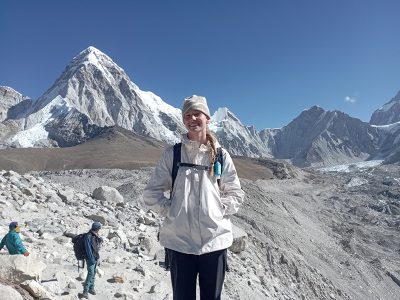
How I Train for Nepal Trekking — And Why the StairMaster Will Save Your Knees
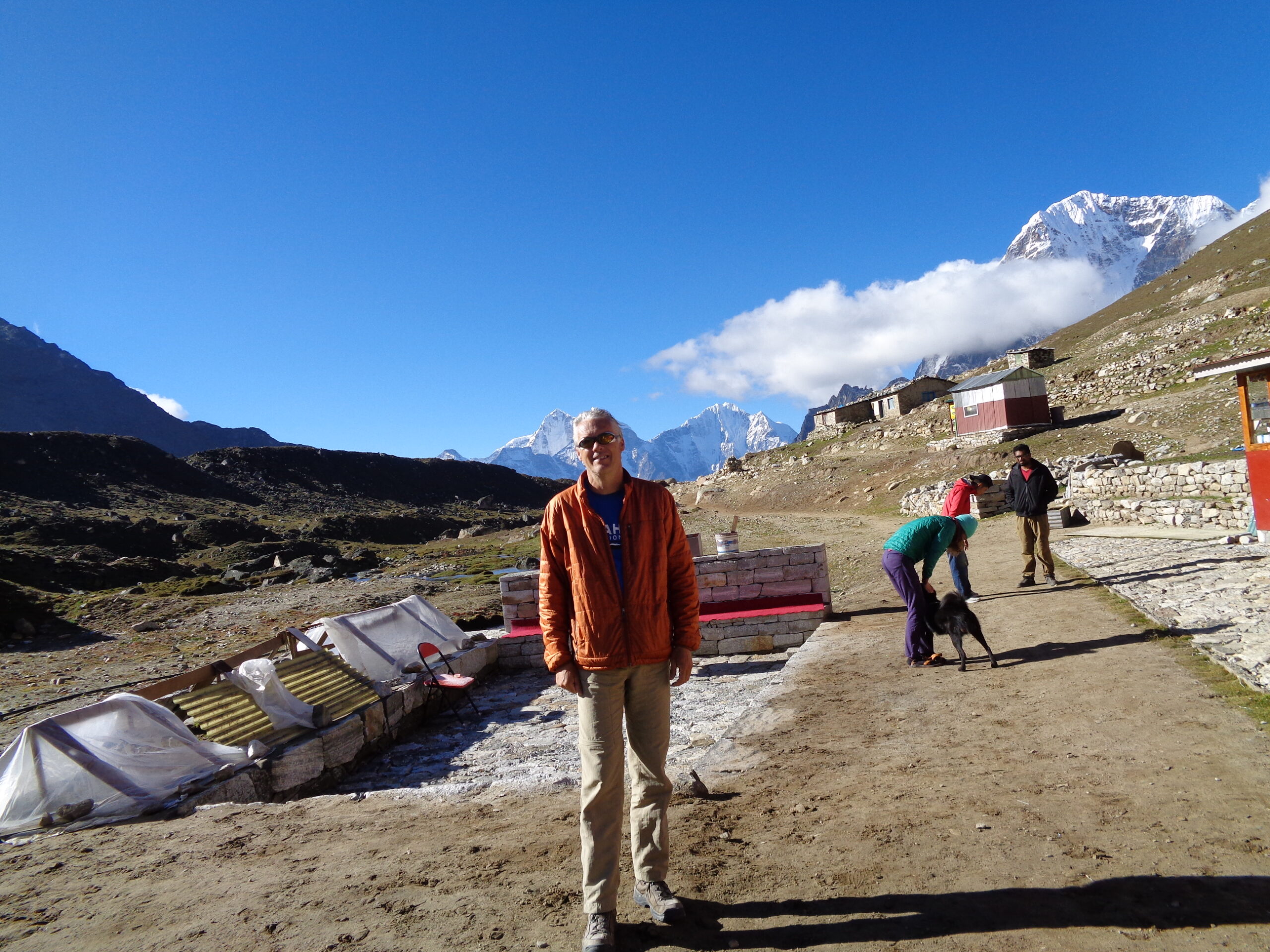
I’ll be honest with you. I’ve trekked Nepal four times — Everest Base Camp twice, the Annapurna Circuit, and the Three Passes — and even when you train hard before you go, the thing that surprises most people on that first trip isn’t the altitude. It’s their legs.
Nepal doesn’t do flat. The terrain is relentlessly vertical — you’re either going up or coming down, sometimes for hours at a time. And what catches most people off guard, especially Americans, is the steps. Thousands of them. Hand-laid stone steps worn smooth by centuries of foot traffic — the same trails used by Sherpa villagers, yak herders, and salt traders long before a single trekker ever set foot in the Khumbu. On the EBC trek you’re looking at 1,300 to 2,600 feet of elevation change on each hiking day — and you’ll have around 8 to 10 of those days over the course of the trek.
Here’s a way to picture that. The Empire State Building is 1,454 feet tall. On a typical hiking day on the EBC trek you’re climbing the equivalent of one to two Empire State Buildings — and then coming back down again. If that sounds intimidating, here’s the encouraging part — thousands of people do this every year who aren’t athletes. Teachers, accountants, retirees. The difference between the ones who struggle and the ones who thrive is almost always preparation, not natural fitness.
And here’s something that stops most Americans cold before they even start — when you land in Lukla, your starting point for the EBC trek, you’re already at 9,383 feet. That’s higher than any mountain in the continental United States. You haven’t taken a single step on the trail yet. Which is exactly why training matters. The Nepal Tourism Board recommends all trekkers arrive physically prepared — and we couldn’t agree more.
Why the StairMaster is Your Best Friend
Here’s the hard truth about fitness in the US — most of us drive everywhere. Europeans walk cobblestone streets, climb hills, take stairs daily. Americans don’t. Unless you live in the mountains, there’s almost no way to replicate Nepal terrain in your daily life. A flat treadmill walk won’t cut it. Neither will cycling.
When I started training for Nepal trekking seriously, the StairMaster became my go-to machine. I’ve watched people cruise effortlessly on the elliptical for an hour and then get absolutely crushed five minutes into their first session on the StairMaster. That machine doesn’t lie — and it’s the closest thing you’ll find in a gym to what Nepal actually feels like.
Each StairMaster step is 8 inches high, similar to those ancient stone steps on the trail, and unlike the elliptical it forces your knees and leg muscles to work through a real range of motion under load. Think of it like a ski run — most ski runs drop about 1,000 feet of vertical. Imagine hiking that up and back down, in boots, with a pack, on uneven stone. That’s a Nepal day. The StairMaster prepares your body for exactly that.
My goal was to build up to an hour at a speed of 7 or 8 — that’s around 3,000 steps. But I started at just 10 minutes. That’s not a typo. My first session I did 10 minutes and felt it the next day. I built up gradually over weeks — 15 minutes, then 20, eventually working to a full hour. That progression matters more than you think.
Training for Nepal Trekking Without a Gym
If you don’t have access to a gym, you may have everything you need already. Find a tall hotel or office building and walk the stairs. A 20-story building is roughly 200 feet of vertical — do it 6 times and you’ve climbed 1,200 feet. It’s free, it’s effective, and honestly it’s closer to Nepal than any gym machine because you’re navigating real stairs at your own pace with no handrails to lean on.
Don’t Forget the Descent
Most people train for going up. Nepal will remind you that coming down is equally brutal, sometimes worse. The descent from Kala Patthar back toward the valley — over 4,300 feet of elevation loss in a single day — puts enormous strain on your knees. Eccentric muscle training, the downhill motion, is something the StairMaster doesn’t fully replicate, so complement it with downhill walks if you have any hills near you, or step-down exercises at the gym.
The good news is that on our treks the pace is set by you, not the guide. Badri’s team is there to support you, not push you. There’s no racing, no pressure to keep up with anyone. That personal, flexible pace makes an enormous difference and is one of the main reasons our trekkers complete their treks successfully.
Train With Your Pack
Your legs aren’t the only thing that needs preparation. You’ll be carrying a day pack for 6 to 8 hours a day — water, layers, snacks, camera, rain gear. That weight adds up and your shoulders and upper back will feel it by day three if you haven’t prepared. Once you’re comfortable on the StairMaster, start wearing your actual pack during sessions. It makes a real difference.
Building Your Cardio Base for Nepal Trekking
The StairMaster at a good pace does double duty — leg training and cardio at the same time. At speed 7 or 8 your heart rate will be in a solid aerobic zone. Nepal at altitude is a different animal — thinner air means your heart works harder for the same effort — but a strong cardio base before you leave makes the adjustment significantly easier. I’ll cover altitude in detail in a separate post because it deserves its own conversation.
A Simple Training Timeline
If you’re booking a trek 3 to 4 months out, here’s how to build:
- Weeks 1–2: Start with 10–20 minutes on the StairMaster, speed 5–6, three times per week
- Weeks 3–4: Push to 20–40 minutes, increase speed to 6–7
- Weeks 5–8: Work toward 60 minutes at speed 7–8
- Weeks 9–12: Full hour sessions with your day pack, add downhill walking when possible
The goal isn’t to become an athlete. Training for Nepal trekking is about feeling strong on the trail instead of just surviving it. And when you’re standing at Everest Base Camp at 17,598 feet looking up at the tallest mountain on earth, you’ll know every one of those StairMaster sessions was worth it.
I’m not a professional athlete. I’m an American guy who fell in love with Nepal and figured out what works. If I can stand at Everest Base Camp, so can you — just give yourself the best possible chance by putting in the work before you go.
Ready to start planning? Browse our Nepal treks or contact us and Badri’s team will help match you with the right route for your fitness level and experience.
Travel Blogs
Stay Informed about travel information and latest updates
Altitude Sickness on Nepal Treks: What I Learned the Hard Way
Before my first trek to Everest Base Camp, I did a lot of research. I wanted to know what I was getting into — including…
How I Train for Nepal Trekking — And Why the StairMaster Will Save Your Knees
I'll be honest with you. I've trekked Nepal four times — Everest Base Camp twice, the Annapurna Circuit, and the Three Passes — and even…