Altitude Sickness on Nepal Treks: What I Learned the Hard Way
Before my first trek to Everest Base Camp, I did a lot of research. I wanted to know what I was getting into — including everything about altitude sickness on Nepal trekking routes. That’s when I stumbled across something that honestly alarmed me — a condition called Cheyne-Stokes respiration, sometimes called periodic breathing at altitude. It works like this: your breathing alternates between deep breaths and shallow ones, until your body briefly stops breathing altogether — a pause that can last five to fifteen seconds — then you wake up gasping for air. You fall back asleep. And then it happens again. All night.
Reading about it was unsettling. But when it happened that first night on the trail, I wasn’t alarmed — I actually recognized it immediately. Oh. This is that thing. I took a breath, reminded myself it was normal, and eventually drifted back off. Knowing what to expect made all the difference.
Why Does Altitude Sickness Happen on Nepal Treks?
At altitude, your body senses low oxygen and breathes faster to compensate. But faster breathing also expels more CO2 — and CO2 is actually what signals your brain to keep breathing. When CO2 drops too low, your brain essentially decides you don’t need to breathe for a moment. Then oxygen drops, your body panics, and you gasp yourself awake.
This cycle can repeat dozens of times an hour. People may breathe this way for most of the night, and it gets more frequent the higher you go. It’s one of the main reasons sleep at altitude feels so unrefreshing — even if you technically slept eight hours, you wake up feeling like you barely rested.
The Headache That Disappears When You Breathe
Headache is the most common and often the earliest symptom of altitude sickness. But the headache I get at altitude is strange in a specific way — if I just stop and take a few slow, deliberate deep breaths, it fades. Do it a few more times and it’s almost gone entirely.
There’s a reason for that. The headache is partly driven by low blood oxygen. When you consciously take deep breaths, you temporarily push more oxygen into your bloodstream, and the headache backs off. It’s your body telling you something useful: breathe more intentionally.
This is different from a headache caused by dehydration, which deep breathing won’t touch. If your headache responds to a few deep breaths, that’s an altitude headache. If it doesn’t, drink water.
Being Fit Doesn’t Make You Immune
Here’s something that surprises a lot of people: being in excellent physical shape doesn’t protect you from altitude sickness the way you might expect. Almost everyone who ascends quickly to 11,000 feet will develop some degree of acute mountain sickness, regardless of fitness level.
Fit people actually have lower resting heart rates — which is normally a sign of a healthy cardiovascular system. But at altitude, where every breath delivers less oxygen, that slower heart rate can mean your body isn’t automatically compensating the way a less-fit person’s might. You may need to consciously breathe deeper and more often than feels natural.
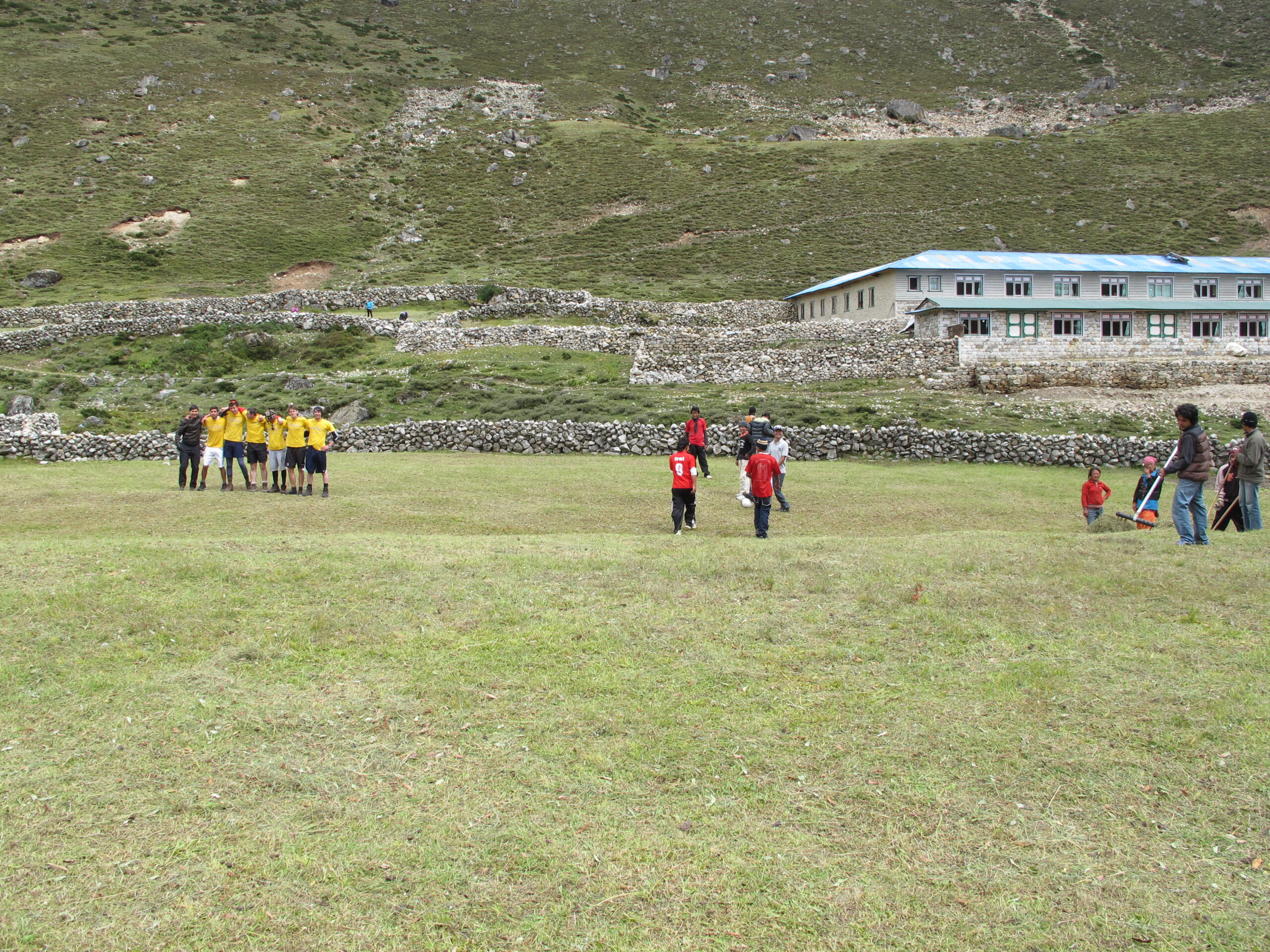
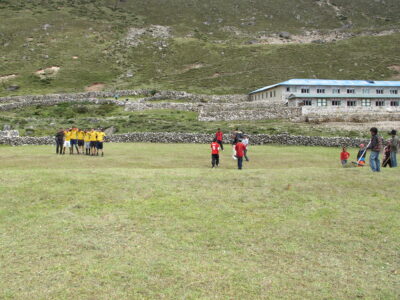
The soccer game I witnessed at around 14,000 feet illustrated this perfectly. A group of British guys in their twenties — clearly fit, clearly competitive — challenged the porters to a match. Someone found a farmer’s recently cleared field. A ball was fashioned from burlap stuffed with grass, and within minutes the game was on. Within a few more minutes, the British guys were doubled over gasping while the Nepali porters — short, lean men who had spent their lives at altitude — ran circles around them. The laughter from the porters was good-natured but also completely deserved.
Eat and Drink Even When You Don’t Want To
Loss of appetite is a documented symptom of altitude sickness — and it’s one of the more insidious ones, because your body actually needs more fuel at altitude, not less. You’re burning significant calories just keeping warm and breathing harder, but your stomach is sending “not hungry” signals.
I force myself to eat and drink on a schedule rather than waiting until I feel like it. If I waited until I was hungry or thirsty above 12,000 feet, I’d eat and drink almost nothing. That leads to dehydration, which makes headaches worse and mimics altitude sickness symptoms on top of the real ones.
Drink before you’re thirsty. Eat before you’re hungry. Simple rule, hard to remember when your appetite has vanished.
Altitude Sickness Nepal Trekking: The Two Acclimatization Days That Could Save Your Trek
The 14-day EBC itinerary is built with two acclimatization days — at Namche Bazaar and Dingboche. These are not rest days in the traditional sense. You don’t just sit in a teahouse drinking tea (though there’s some of that).
On each acclimatization day, your guide leads you on a shorter hike that goes higher than where you slept — and then brings you back down to sleep at the lower elevation. This is the “climb high, sleep low” principle, and it’s the backbone of safe high-altitude trekking.
As you ascend, your body increases breathing rate, heart rate, and red blood cell production to cope with the thinner air. Acclimatization days give your body the time it needs to make these adaptations. More red blood cells means more oxygen-carrying capacity — your body is literally rebuilding itself for the environment.
I remember one of those acclimatization hikes vividly. At a steep section above 15,000 feet, I had to stop after every single step — not every few steps, every single step — and take four or five breaths before I could move again. That was humbling for someone who trains regularly. But it was also exactly what my body needed to be doing.
The Drug That Helps (But Makes You Pee Constantly)
Before my first trip I also came across a medication called acetazolamide — most people still call it by its old brand name, Diamox, even though the brand no longer exists and it’s now sold as a generic.
It works by stimulating your breathing, which helps increase the amount of oxygen in your bloodstream, effectively speeding up acclimatization and reducing symptoms like headaches, dizziness, nausea, and fatigue. The standard approach is 125mg twice daily, started about 24 hours before you begin ascending.
I’ll be honest — I didn’t take it on my treks. I wanted to experience the acclimatization process naturally and see how my body handled it. That’s a personal choice, and I’m not recommending either way. What I will tell you is that plenty of trekkers on the trail were taking it, and some swore by it.
The Side Effects Worth Knowing
The catch \u2014 and you already guessed it from the headline \u2014 is that it makes you urinate frequently. At higher elevations on the EBC trek, your bathroom is a shared one down the hall or a flight of stairs — not exactly convenient at 3am when it’s freezing and dark. And here’s the double bind: the drug is a diuretic, which means you need to drink even more water to stay hydrated — but as we talked about earlier, altitude already kills your thirst. So you’re forcing yourself to drink more than feels natural, while also losing more fluid than usual. It’s manageable, but it’s worth knowing going in. Many users also report a tingling pins-and-needles sensation in their fingers, toes, and face — harmless, but disconcerting the first time it happens if you don’t know to expect it.
Altitude sickness on Nepal trekking itineraries is a real concern whether you’re doing the classic 14-day EBC trek or the 10-day option with helicopter return — the acclimatization days are non-negotiable.
The most important thing to understand: acetazolamide is a preventive tool, not a cure. The drug helps your body adjust more smoothly. It does not override serious altitude sickness, and it is not a substitute for descending if your symptoms are getting worse.
A prescription is required, so bring it up with your doctor well before your departure date.
Altitude Sickness Nepal Trekking: When the Only Answer Is Down
I met a handful of trekkers on both my EBC trips who had to turn back. It’s always a difficult moment — weeks of planning, thousands of dollars, a dream cut short. But the rule at altitude is non-negotiable.
The golden rule: the only cure for severe altitude sickness is descent. You should never ascend with symptoms of AMS. No amount of willpower, ibuprofen, or acclimatization tea changes that. If symptoms are getting worse rather than better, going down is the right call — and often, descending even a few hundred meters brings dramatic relief within hours.
The people I saw head back down were not weak or unprepared. Altitude sickness doesn’t care about your fitness level, your age, or how many mountains you’ve climbed before. It hits who it hits.
What You Can Do
- Go slow. The itinerary exists for a reason. Don’t rush it.
- Sleep low. Climb high during the day, always return to a lower elevation to sleep.
- Drink constantly. More than feels necessary.
- Eat on a schedule. Don’t trust your appetite above 12,000 feet.
- Breathe deliberately. Deep, slow breaths — especially when you feel a headache coming on.
- Talk to your guide. They’ve seen every symptom and will not judge you for asking.
- Descend if symptoms worsen. Full stop.
Understanding altitude sickness is the foundation of safe Nepal trekking — and the mountain isn’t going anywhere. Your health is the only thing that matters on the trail.
For official trekking permits and travel information, visit the Nepal Tourism Board.
Glenn has trekked to Everest Base Camp twice, completed the Annapurna Circuit, and the Three Pass Trek. Tea House Treks operates with expert local guides who monitor trekkers daily for signs of altitude sickness.
Travel Blogs
Stay Informed about travel information and latest updates
Altitude Sickness on Nepal Treks: What I Learned the Hard Way
Before my first trek to Everest Base Camp, I did a lot of research. I wanted to know what I was getting into — including…
How I Train for Nepal Trekking — And Why the StairMaster Will Save Your Knees
I'll be honest with you. I've trekked Nepal four times — Everest Base Camp twice, the Annapurna Circuit, and the Three Passes — and even…